
A sudden, sharp pain at the back of your thigh can stop you mid-sprint or mid-match. The first question is usually how long it will take to heal.
Your hamstring strain recovery time depends on how badly the muscle is hurt. The NHS says a mild hamstring injury usually gets better within a few days, but a severe one can take weeks or months.
This guide covers recovery by grade, first-days care, gentle NHS exercises and when to run again. Not sure how bad yours is? A physiotherapy assessment can check it.
Key takeaways
- Hamstring strain recovery time depends on the grade: a few days for a mild strain, weeks or months for a tear.
- Follow PRICE for the first 2 to 3 days, and skip heat, massage and alcohol for 3 days.
- Go back to running when your leg is pain-free and strong, not on a set date.
- Get urgent help for a pop with severe pain, heavy bruising or a leg you cannot put weight on.
Hamstring strain recovery time by grade
A grade 1 (mild) strain usually gets better in a few days. A grade 2 (partial) tear takes weeks, and a grade 3 (severe) tear can take several months. Everyone heals at a different rate, as a Dudley Group NHS leaflet points out, so treat these as ranges, not dates.
| Grade | What it means | What you may notice | Typical recovery |
|---|---|---|---|
| Grade 1: mild strain | Fewer than 10% of the muscle fibres are torn | Sudden pain and tenderness; your strength should not be affected | Usually better within a few days |
| Grade 2: partial tear | 10% to 50% of the fibres are injured | More pain, some swelling and bruising, some loss of strength | Weeks: most strains feel better after 2 weeks, but avoid running for up to 8 weeks |
| Grade 3: severe tear | More than 50% of the fibres, sometimes a complete rupture | Very painful, swollen and bruised, maybe a “pop”; you cannot use the leg | Several months, with no training or sport; also several months after surgery, if needed |
Torn hamstring recovery time is the longest: nidirect says a complete tear may take several months to heal.
In a study of footballers from 23 European professional teams, the average time out was 17 days for an MRI grade 1 injury. It was 22 days for grade 2 and 73 days for grade 3, though grade 3 times varied widely.
So use the table as a rough hamstring strain recovery timeline, not a promise. Your own hamstring strain healing time may be shorter or longer.
Pulled or torn hamstring: what is the difference?
A pulled hamstring and a torn hamstring are the same injury at different strengths. The NHS describes a strain as an overstretched or torn muscle, “also known as a pulled muscle”.
nidirect calls grade 1 a mild strain, grade 2 a partial tear and grade 3 a severe tear. So “pulled” usually fits a mild strain, while “torn” fits grades 2 and 3. The grade, not the word, sets your pulled hamstring recovery time.
Unsure which you have? nidirect says a physiotherapist is best placed to advise you on managing it.
Pulled and torn hamstring symptoms
Typically, you feel a sudden, sharp pain at the back of the thigh, often while sprinting, kicking or lunging. The NHS and nidirect list these common signs:
- a sharp pain at the back of your thigh
- a snapping feeling or a “pop” when the injury is severe
- tenderness, then swelling and bruising after a few hours
- difficulty standing or walking on that leg
- some loss of strength with a partial or complete tear
Walking and everyday tasks may bring the pain on, says a JOSPT guide for patients. If your pain spreads down the leg with tingling or numbness, our sciatica symptoms guide may help.
What affects how long a hamstring injury takes to heal?
The grade matters most, but your hamstring injury recovery time also depends on the tendon, your history and your rehab:
- The tendon. In a trial of elite sprinters and jumpers, injuries involving the upper (proximal) tendon took longer. On the same rehab plan, the average return took 73 days, against 31.
- A previous injury. nidirect says you are more likely to injure your hamstring if you have hurt it before.
- Going back too soon. A 2017 review found nearly a third of hamstring strains come back within a year of returning to sport, often worse than before.
- The type of rehab. In the same sprinter trial, lengthening exercises got athletes back to full training sooner: 49 days on average, against 86.
- Too much rest. Resting for too long can let the muscle shrink and scar tissue form, nidirect warns.
How to treat a pulled hamstring in the first few days
You can treat a mild to moderate pulled hamstring at home: the NHS advises PRICE for the first 2 to 3 days. For the first 3 days, also avoid heat, alcohol, running and massage, which nidirect calls HARM.
- Protection: protect your leg from another knock or strain.
- Rest: stop sport and exercise, and try to keep your weight off the leg.
- Ice: hold an ice pack wrapped in a tea towel on the sore area for up to 20 minutes. Repeat every 2 to 3 hours.
- Compression: wear a tubular or elastic bandage that feels snug, not tight, and take it off at night.
- Elevation: rest your leg up on a pillow whenever you can.
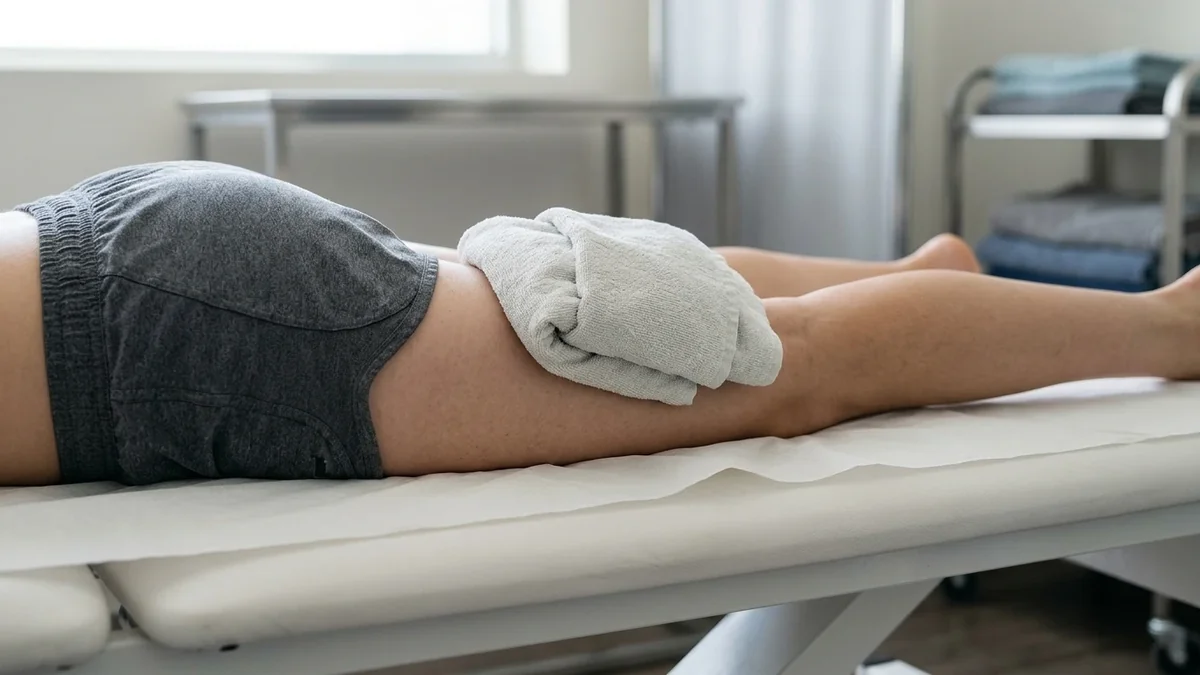
A pharmacist can advise you on pain relief. nidirect says ibuprofen tablets can be taken 48 hours after the injury, if needed.
Once pain no longer stops you moving, keep the leg moving so it does not stiffen. A Sherwood Forest Hospitals leaflet adds that walking as normally as you can, with weight through the leg early on, can aid recovery.
Can you heal a pulled hamstring in 2 days?
No. If you are searching for how to heal a pulled hamstring in 2 days, the NHS offers no fast fix. It advises PRICE for the first 2 to 3 days, and a mild injury usually gets better within a few days.
Feeling better is not the same as being ready to sprint, though. Tears take weeks or months, and nidirect warns that going back to hard exercise too quickly could make the injury worse.
Gentle exercises for a hamstring strain
Start gentle movement once pain allows, then build strength over the following weeks. These steps come from a Hampshire Hospitals NHS hamstring exercise programme; do them at least three times a day.
Only move on to the next set when the current one feels comfortable.
Days 1 to 3: gentle movement
- Gently bend and straighten your knee, as far as pain allows, for 2 minutes.
- Lie on your front and gently bend your heel towards your bottom, 10 times.
- With your leg straight, tighten your thigh muscle as if pushing the knee straighter, 10 times.
Days 4 to 14: strength and balance
- Stand on your injured leg and hold your balance for 30 seconds, building up to 1 minute.
- Rise up onto your toes and back down, with your weight even on both feet, 10 times.
- Sit with your legs out in front, tighten your thigh and lift the straight leg up and down, 10 times.
From about day 8: wall pushes
Lie on your back and use a wall or doorframe for resistance as you try to bend your knee. Hold for 5 seconds and repeat 10 times. The leaflet’s aim is at least 10 pain-free wall pushes by the end of 4 weeks.
Should you stretch a pulled hamstring?
Yes, gently, once the pain has started to settle after a few days, says nidirect. Then add gentle exercise such as walking, cycling and hamstring strengthening.
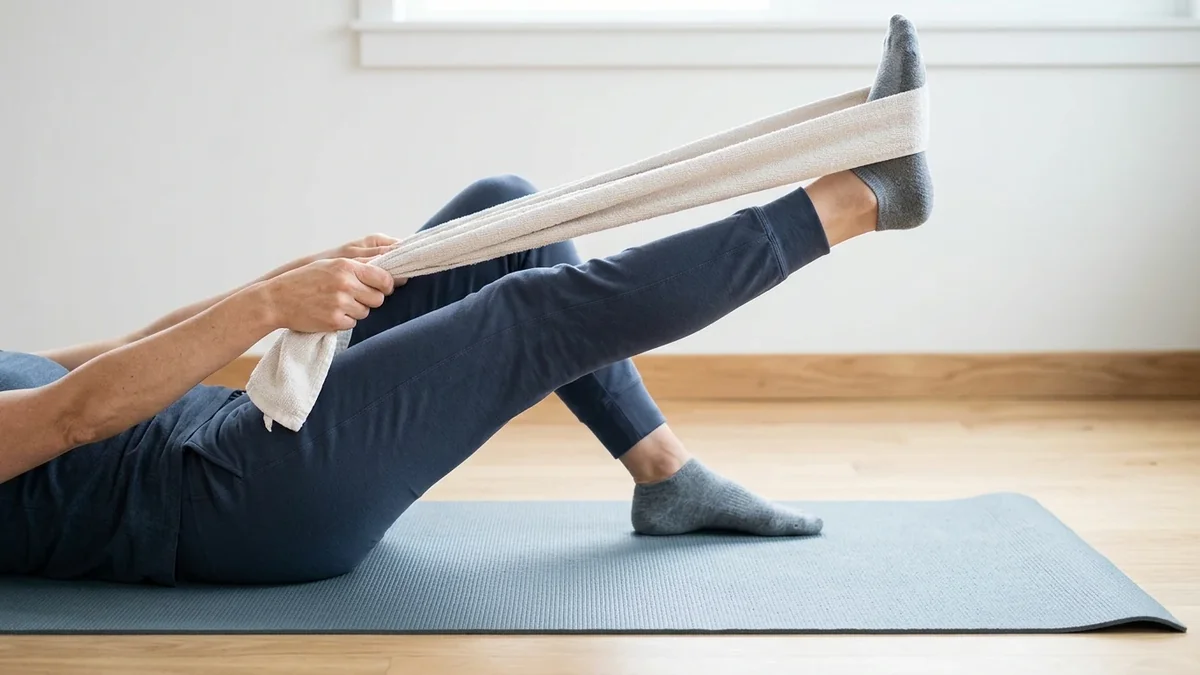
For the lying stretch, South Tees Hospitals NHS Foundation Trust suggests you lie on your back, knees bent. Lift the injured leg and straighten the knee, holding behind it or using a towel.
Aim for a gentle, steady pull, not pain. If you have a back problem, ask a physiotherapist before you try it.
Stop and get advice if pain turns sharp or worse, swelling or bruising grows, or standing gets harder. A physiotherapist can turn these steps into a graded exercise plan, adding lengthening exercises when you are ready.
When can you run again after a hamstring strain?
Run again when your leg is ready, not on a set date. For strains, the NHS advises avoiding strenuous exercise such as running for up to 8 weeks, as you risk further damage.
nidirect adds that you should only return to your full level of activity once your hamstrings are strong enough.

| Check | What it looks like |
|---|---|
| Full movement | You can fully bend and straighten your knee and hip without pain |
| Strength | Your injured leg has regained its strength compared with the other leg |
| Jogging | You can jog without a limp |
| Turning and hopping | You can change direction, jump and hop without pain or the leg giving way |
| Sport | You can sprint, kick and change direction at full speed with no hamstring pain |
Changing direction usually takes the longest to get back. A full return to sport can take weeks to months, says the JOSPT guide.
If your knee starts to ache as you build up your running, our runner’s knee guide may help.
How to stop a hamstring strain coming back
Rebuild strength before you go back to full speed. The NHS also suggests these habits:
- build your fitness up gradually if you have not exercised for a while
- warm up before exercise
- stop if your hamstrings start to hurt
- avoid exercising when you feel tired
Strength work helps too. A 2019 review of 15 studies found that programmes including the Nordic hamstring exercise cut hamstring injuries by up to 51%. Ask a physiotherapist when it is safe to add it.
When to see a physiotherapist or get urgent help
Get urgent help for the warning signs below. Otherwise, the NHS suggests a physiotherapist if healing is slower than expected, or you have hurt your hamstring before.
Call 999 or go to A&E if:
- you heard a crack when you were injured
- your leg has changed shape or points at an odd angle
- it feels numb or tingly, or has pins and needles
- the skin looks blue or grey, or feels cold
After a sudden injury, get urgent assessment at a walk-in centre or A&E if:
- you cannot put any weight through your leg
- you can see a new change in shape or a large gap in the muscle
Contact NHS 111 if:
- the pain is severe or getting worse
- the swelling or bruising is large or getting worse
- walking or standing on the leg hurts
- your leg is very stiff or hard to move
- self-care has not helped
- you have a high temperature, or feel hot and shivery
Sources: NHS and the Tyneside NHS leaflet.
Most adults in England can refer themselves to NHS physiotherapy, but waiting times can be long. You can also book privately, with no GP referral.
At Prime Physiotherapy Clinic, we assess your leg and plan your rehab and return to running. Hands-on treatment or sports massage can be added after the first 3 days, and taping where it suits you.
If you need a scan or a doctor’s opinion, we will explain why and advise you to see your GP. Book a physiotherapy assessment to get started.
A pop high up near your buttock
A sudden pop with severe pain high in the back of the thigh, near your sitting bone, needs checking promptly. Tenderness, bruising and weakness there can mean the tendons are injured where they attach.
A full tear of these tendons off the bone is uncommon but serious, and a 2021 review says it is often missed or found late. Some people need an operation, and the NHS says recovery after surgery takes several months.
Hamstring strain FAQs
Can you walk with a pulled hamstring?
It depends on the grade. The Tyneside NHS leaflet says you can usually carry on with daily activities after a mild strain. If you cannot put any weight through the leg, get urgent help.
Is bruising normal with a pulled hamstring?
Yes, bruising is common. The NHS says the back of the thigh can become swollen and bruised a few hours after the injury. Contact NHS 111 if the bruising is large or getting worse.
Should I use heat or ice on a pulled hamstring?
Use ice first, not heat. The NHS advises a wrapped ice pack in the first days, and no hot baths or heat packs for 3 days.
Can you massage a pulled hamstring?
Not in the first 3 days. The NHS advises against it then, and the Dudley Group NHS leaflet says early massage can increase swelling. After that, ask a physiotherapist if it suits your injury.
Book a hamstring strain assessment in Birmingham
Your hamstring strain recovery time depends on the grade, early care and steady rehab. Know the warning signs, and return to running only when your leg is strong.
Prime Physiotherapy Clinic can assess your injury and plan your return to sport. Every appointment is £50 for 45 minutes, self-pay, with no GP referral needed. Visit us at Suite 3A, Cobalt Square, 83–85 Hagley Road, Birmingham B16 8QG.
We are open Monday to Sunday, 9am to 9pm. Book your assessment online, call or WhatsApp us on +44 7944 274894, or contact us. We aim to reply within 2 hours during opening hours.