

Sciatica symptoms can feel worrying because the pain often travels away from the back and into the buttock, thigh, calf or foot. Some people describe it as a sharp electric pain, while others feel burning, tingling, numbness or a deep ache that changes with sitting, bending, coughing or walking. The important first step is to understand that sciatica is not a diagnosis by itself. It is a set of symptoms linked to irritation or sensitivity of the sciatic nerve or the nerve roots that help form it.
This guide explains the common symptoms of sciatica, what can cause them, which exercises and stretches may help, what to avoid in the early stages and when it is sensible to see a physiotherapist. It is written for people in the UK who want clear, practical advice without dramatic language or generic internet guesses. If your symptoms are severe, changing quickly or linked with weakness, bladder or bowel changes, or numbness around the saddle area, seek urgent medical advice rather than trying exercises first.
What Is Sciatica?
Sciatica is commonly used to describe pain that travels along the path of the sciatic nerve. The sciatic nerve starts from nerve roots in the lower back, passes through the buttock and continues down the back of the leg. When one of these nerve roots or the nerve itself becomes irritated, compressed or sensitised, symptoms can spread into areas that are supplied by that nerve.
The source is not always a trapped nerve in the dramatic sense. In many cases, the nerve is sensitive because of inflammation around a disc, irritation near the lower back joints, muscle guarding around the hip and pelvis, or a period of overload that has made the nervous system more protective. That is why two people can both say they have sciatica but need different treatment plans.
A useful way to think about sciatica is this: the leg pain is the signal, but the job of assessment is to find the driver. A good physiotherapy assessment looks at your symptom pattern, movement, strength, reflexes where needed, walking tolerance, sitting tolerance and the positions that ease or aggravate symptoms. That gives a better starting point than simply searching for a single stretch and hoping it works.
Common Sciatica Symptoms
The most recognised sciatica symptom is pain that travels from the lower back or buttock into the leg. It may stop at the thigh, reach the calf, or continue into the foot and toes. The pathway can vary depending on which nerve root is sensitive. Some people feel most of it in the buttock; others have very little back pain but strong calf or foot symptoms.
- Shooting or electric leg pain: often worse with sitting, bending, coughing or sneezing.
- Burning pain: a hot or irritated feeling down the buttock, thigh, calf or foot.
- Tingling or pins and needles: commonly felt in the calf, heel, outside of the foot or toes.
- Numbness: a reduced or altered feeling in part of the leg or foot.
- Weakness: difficulty lifting the foot, pushing through the toes, climbing stairs or standing from a chair.
- Position-related symptoms: pain that changes clearly with sitting, standing, walking or lying.
Symptoms that move further down the leg are often more irritating than symptoms that stay around the back or buttock. In physiotherapy we also pay attention to centralisation and peripheralisation. Centralisation means leg symptoms reduce or move closer to the back as you move or exercise. Peripheralisation means symptoms travel further down the leg. If an exercise repeatedly pushes symptoms further into the foot, that exercise is probably not right for you at that stage.
What Causes Sciatica Symptoms?
The causes of sciatica symptoms are varied. A disc bulge or disc irritation is one possible cause, especially if symptoms are worse with sitting, bending or lifting. However, scans often show disc changes in people who have no pain, so imaging alone does not always explain the full picture. The clinical story matters: when symptoms started, how they behave and how your strength and sensation are affected.
Other possible contributors include narrowing around a nerve root, joint irritation in the lower back, muscle spasm, sensitivity around the deep gluteal region, reduced hip mobility, a sudden increase in training, prolonged sitting, heavy lifting with fatigue, or a combination of several factors. In older adults, leg symptoms that improve with sitting and worsen with walking may need a different approach from symptoms that are most painful when sitting.
This is why the best exercise for sciatica is not the same for everyone. One person may respond well to gentle extension-based movements. Another may need nerve glides, walking tolerance work, hip mobility and careful strengthening. A third may need to stop stretching aggressively because the nerve is already irritated and does not want more tension.
When Sciatica Needs Urgent Medical Advice
Most sciatica symptoms are not dangerous, but some patterns need urgent assessment. Do not wait for a routine appointment if you develop new bladder or bowel control problems, numbness around the saddle area, rapidly worsening leg weakness, severe unrelenting pain after trauma, unexplained fever, unexplained weight loss, or symptoms linked to a history of cancer or significant infection risk.
In particular, bladder or bowel changes with saddle numbness can be signs of cauda equina syndrome, which is a medical emergency. It is uncommon, but it needs fast attention. If you are unsure and symptoms feel unusual or severe, it is safer to contact NHS 111, urgent care or emergency services depending on the severity.
What To Do In The First Few Days
In the early stage, the aim is usually to calm symptoms rather than force a dramatic stretch. Many people try to stretch the hamstring or glute hard because the leg feels tight. Sometimes that helps briefly, but if the nerve is sensitive, strong stretching can make the leg pain sharper. Start with positions and movements that reduce symptoms or keep them no worse.
Keep moving within tolerance. Short, frequent walks often work better than one long walk that flares symptoms for the rest of the day. If sitting is painful, change position regularly, use a small lumbar support and stand before symptoms build. If lying is easier, use it as a recovery position, but avoid staying still all day because prolonged rest can make the back and leg more sensitive.
Heat may help if the back and hip muscles feel guarded. Some people prefer a cold pack if symptoms feel inflammatory. Neither is a cure, but either can help you move more comfortably. Over-the-counter medication may be useful for some people, but speak with a pharmacist or GP if you are unsure what is safe for you, especially if you have other medical conditions or take regular medication.
Sciatica Exercises: Start With Symptom Response
Exercises for sciatica should be chosen by response, not by popularity. A good exercise should feel comfortable or only mildly challenging, should not increase leg pain afterwards and should ideally make walking, sitting or standing a little easier. If an exercise feels sharp, increases pins and needles, or sends pain further down the leg, stop and choose a gentler option. If your pain sits mainly deep in one buttock, our guide to exercises for piriformis syndrome may also help.
1. Gentle Walking Intervals
Walking is often underrated. Try a comfortable pace for three to five minutes, then rest or change position before symptoms build. Repeat several times across the day. As symptoms settle, increase the time gradually. The goal is not to prove toughness; it is to teach the back and leg that movement is safe again.
2. Pelvic Tilts
Lie on your back with knees bent. Gently flatten the lower back towards the floor, then release to a small arch. Move slowly for 8 to 12 repetitions. This can help reduce guarding and reconnect comfortable movement around the lower back. Keep the movement small and avoid bracing hard.
3. Sciatic Nerve Glides
Sit tall on the edge of a chair. Slowly straighten one knee as far as comfortable while looking slightly up, then bend the knee as you relax the head slightly down. The movement should feel like a gentle glide, not a strong stretch. Try 5 to 8 repetitions and stop if tingling or leg pain increases. Nerve glides are about movement, not pulling.
4. Prone Lying Or Elbows Prop
Some people with sciatica feel better lying on their front or propping gently on the elbows. Start with one to two minutes. If leg symptoms reduce or move closer to the back, this may be a useful direction. If it worsens leg pain, stop. Do not force repeated press-ups unless you have been assessed or you are clearly improving with that direction.
5. Supported Bridge
Lie on your back with knees bent and feet on the floor. Gently lift the hips a small distance, pause, then lower slowly. Start with 6 to 8 repetitions. This can help the glutes and trunk muscles contribute without heavy loading. Keep it pain-free and avoid pushing into leg symptoms.
Sciatica Stretches: Helpful Or Harmful?
Sciatica stretches can help when stiffness around the hip or lower back is part of the problem, but they can irritate symptoms if used too aggressively. The sciatic nerve does not like being yanked. If you stretch the hamstring and feel a sharp line of pain, tingling or burning down the leg, you are probably tensioning the nerve rather than stretching a muscle.
A gentler option is to use short holds and stop before symptoms intensify. For example, a figure-four stretch can be useful if the buttock feels tight, but it should feel like a broad hip stretch rather than a nerve pain. Hold for 10 to 20 seconds, breathe normally and repeat only if symptoms stay calm afterwards. If you feel worse later in the day, reduce the stretch or remove it for now.
Another option is a knee-to-chest movement, but this is not suitable for everyone. If bending the spine increases leg symptoms, leave it out. If it eases back tightness without increasing leg pain, it may be useful. The same rule applies to every stretch: the response in the next hour matters more than how flexible you look during the exercise.
What To Avoid With Sciatica
Avoid long periods in the position that clearly aggravates symptoms. For many people that is sitting, especially sitting slumped in a soft chair. For others it may be standing still or walking too far. You do not need to fear these positions forever, but in the early stage it makes sense to dose them carefully.
- Avoid repeatedly testing painful movements to see if the pain is still there.
- Avoid aggressive hamstring stretching if it reproduces nerve pain.
- Avoid heavy lifting from the floor while symptoms are highly irritable.
- Avoid complete bed rest unless advised medically.
- Avoid pushing exercise intensity because you feel guilty about resting.
- Avoid comparing your recovery timeline with someone else’s scan result or story.
The goal is not avoidance forever. It is temporary symptom management while you rebuild tolerance. A physiotherapist can help you reintroduce bending, lifting, sitting, running or gym work in stages so you are not stuck with a long list of restrictions.
How Physiotherapy Helps Sciatica
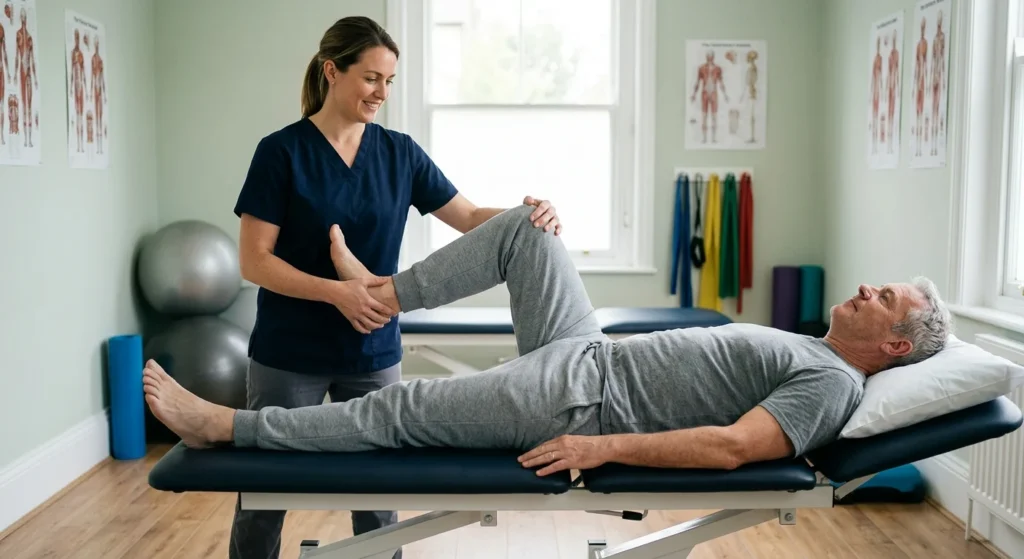
Physiotherapy for sciatica begins with assessment. At Prime Physiotherapy Clinic, we look at your history, symptom behaviour, movement, strength, sensation where appropriate and the daily tasks you need to return to. This helps separate nerve-dominant symptoms from back pain that simply refers into the leg, hip-related pain, muscle strain or other causes.
Treatment may include advice on positions, graded activity, manual therapy, gentle nerve mobility, hip and back mobility, strengthening, walking progression and return-to-work or return-to-sport planning. Hands-on treatment can be useful when pain and guarding are limiting movement, but it should be paired with a plan you can use between sessions.
A physiotherapist can also help you understand what pain means. With sciatica, people often become frightened by every twinge in the leg. Education matters because fear can reduce movement, increase guarding and slow confidence. Clear explanation is not a small extra; it is part of treatment.
If your symptoms need medical review, your physiotherapist can guide you on the right next step. That might mean GP review, medication discussion, imaging referral routes or urgent care if red flags are present. Good physiotherapy is not about keeping every patient in physiotherapy; it is about making the safest and most useful decision for your presentation.
A Practical Seven-Day Sciatica Plan
This plan is not a replacement for assessment, but it can give structure if your symptoms are mild to moderate and you have no urgent warning signs. Keep a simple note of your symptoms each day: leg pain intensity, how far down the leg it travels, sitting tolerance, walking tolerance and sleep. Patterns are more useful than single moments.
- Day 1 to 2: calm the symptoms. Use short walks, comfortable resting positions, gentle pelvic tilts and regular position changes.
- Day 3 to 4: add gentle nerve glides if they do not increase leg symptoms. Continue walking intervals and reduce the biggest aggravating position.
- Day 5: add light strengthening such as supported bridges if symptoms are settling. Keep repetitions low and stop before fatigue changes your movement.
- Day 6: test one normal activity in a controlled way, such as a slightly longer walk or a short period of desk work with breaks.
- Day 7: review. If leg symptoms are reducing, continue gradual progression. If symptoms are unchanged, worsening or limiting normal life, book an assessment.
Progress is rarely perfectly straight. A small flare does not mean you have failed or damaged yourself. It often means the dose was too much for that day. Reduce the volume, return to calming movements and build again more gradually.
How Long Does Sciatica Take To Improve?
Many episodes improve over several weeks, but the timeline depends on severity, cause, general health, sleep, stress, work demands, activity level and whether symptoms are improving or worsening. Mild symptoms that stay above the knee may settle quickly. Strong leg pain with numbness or weakness usually needs closer monitoring and a more careful plan.
The better question is not only how long it takes, but whether the trend is moving in the right direction. Are you walking further? Is leg pain less intense? Is tingling less frequent? Are symptoms moving out of the foot and closer to the back? Are you sleeping better? These signs often matter more than the pain score on one difficult morning.

If symptoms are not improving after two to four weeks, if they keep returning, or if pain is stopping work, sleep or basic daily tasks, a physiotherapy assessment is sensible. Early guidance can prevent weeks of trial and error, especially if you have already tried random stretches from online videos without a clear response.
How To Track Sciatica Progress At Home
Tracking sciatica symptoms does not need to be complicated. A short note once a day is enough. Record where the pain travels, how intense it feels, how long you can sit, how far you can walk, whether sleep was interrupted and which movements seemed to help. This gives you a clearer picture than judging recovery by one painful moment.
Pay particular attention to leg symptoms. If pain is becoming less frequent, less intense or moving out of the foot and closer to the back, that can be a useful sign. If symptoms are spreading further down the leg, numbness is increasing or strength is changing, the plan should be reviewed. A diary also helps your physiotherapist make better decisions because it shows patterns across real life, not only what happens during an appointment.
Sitting, Driving And Work With Sciatica
Sitting is a common trigger, especially when the lower back is flexed and the hip is held in one position for a long time. If you work at a desk, use regular breaks before symptoms build. Stand for a minute, walk to another room or do two gentle pelvic tilts. Waiting until leg pain is strong usually makes it harder to calm down.
For driving, keep journeys shorter where possible during a flare. A small lumbar support can help some people, but comfort is individual. If symptoms increase during a drive, stop safely, stand, walk and reset before continuing. Do not use stretching at the roadside if it sends pain further down the leg. Gentle walking is often a better reset.
If your job involves lifting, childcare, caring duties or long standing, the plan may need to include task-specific changes. That might mean splitting loads, bringing items closer before lifting, changing work height, alternating tasks or temporarily reducing heavy floor lifts. These changes are not signs of weakness. They are ways to reduce irritation while strength and tolerance return.
Common Mistakes That Delay Sciatica Recovery
The first mistake is chasing the strongest stretch. A tight-feeling hamstring can actually be a sensitive nerve. Pulling harder may create more tingling, burning or shooting pain. The second mistake is doing nothing until the pain disappears completely. Long periods of fear-based rest can reduce confidence and make normal movement feel threatening.
The third mistake is changing too many things at once. If you start five new exercises, change your chair, take new medication and increase walking all on the same day, it becomes hard to know what helped or irritated symptoms. Make one or two sensible changes, monitor the response and progress from there. Sciatica recovery is often about careful dosing, not dramatic effort.
FAQs About Sciatica Symptoms
Can sciatica go away on its own?
Yes, some episodes improve with time, sensible activity and symptom management. However, if symptoms are severe, worsening, recurring or linked with numbness or weakness, assessment is a better choice than waiting indefinitely.
Should I stretch sciatica every day?
Only if stretching helps and does not increase leg symptoms. Gentle mobility is often better than strong stretching in the early stage. If a stretch creates tingling, burning or shooting pain, stop and choose a gentler movement.
Is walking good for sciatica?
Walking is often helpful when dosed well. Short, frequent walks are usually better than pushing through a long walk that causes a flare. If walking rapidly worsens leg pain or weakness, seek professional advice.
Can a physio treat sciatica?
A physiotherapist can assess sciatica symptoms, screen for warning signs, identify movement patterns that influence symptoms and build a plan using advice, exercise, manual therapy and graded activity where appropriate.
When To Book A Physio Assessment
Book a physiotherapy assessment if your sciatica symptoms are stopping you from working, sleeping, walking or exercising normally, if symptoms have lasted more than a couple of weeks without improvement, or if you are unsure which exercises are safe. You do not need a GP referral to book privately.
At Prime Physiotherapy Clinic in Birmingham, we can assess your back and leg symptoms, explain what is likely happening and build a plan that fits your goals. You can start with a physiotherapy assessment, progress into exercise prescription where appropriate, or book an appointment online if you are ready to get started.