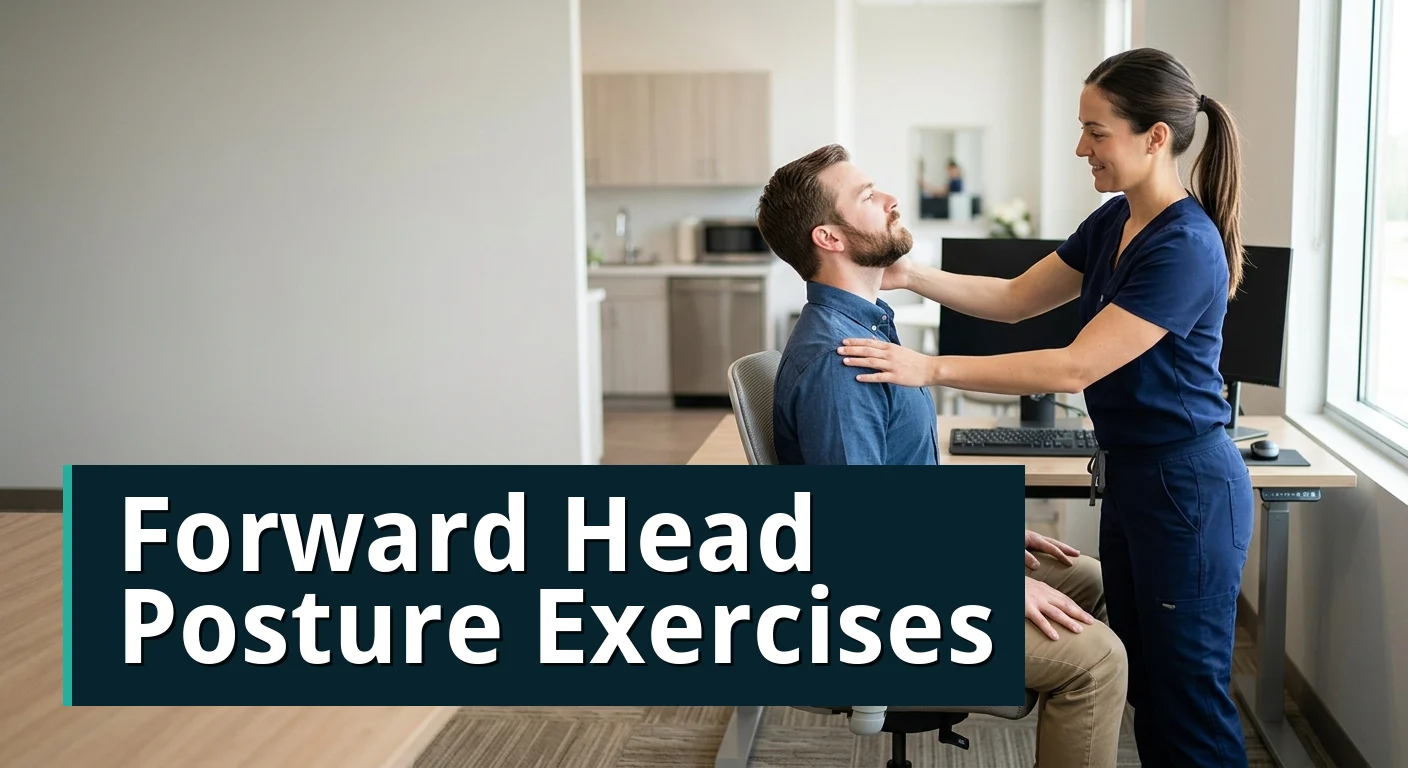
Forward head posture exercises can help reduce neck and shoulder strain, but the goal is not to force yourself into a perfect posture every minute of the day. Forward head posture usually develops because your body has adapted to repeated positions: laptop work, phone use, driving, stress, poor screen height or long periods without movement. Exercises help most when they are combined with better desk habits, regular movement and strengthening.
This guide explains what forward head posture is, why it can contribute to symptoms, which exercises to start with and how to make changes that last. It is designed for desk workers, students, drivers and anyone who feels neck tension, upper-back stiffness or shoulder strain after long periods sitting. If you have severe neck pain, arm weakness, numbness, dizziness, visual symptoms or symptoms after trauma, seek medical advice before exercising.
What Is Forward Head Posture?
Forward head posture describes a position where the head sits forward in relation to the shoulders and upper back. The chin may poke forwards, the upper neck may extend and the shoulders may round. It is common in people who spend long hours using screens, but it is not automatically a problem. Many people have forward head posture and no pain.
The issue is usually not the posture itself but the lack of movement variety and the amount of time spent there. If your neck stays in one position for hours, the muscles around the neck and upper back work continuously at a low level. Over time, they can become tired, sensitive and tight. Exercises aim to restore movement options and build endurance.
It is more helpful to think about posture as a habit than a fixed deformity. Habits can change with awareness, environment and repetition. You do not need to hold a military posture. You need enough strength, mobility and desk variation that your neck is not stuck doing the same job all day.
Symptoms Linked With Forward Head Posture
- Neck ache after desk work or phone use.
- Upper-back stiffness between the shoulder blades.
- Headaches linked with neck tension.
- Shoulder tightness or heaviness.
- Jaw tension or a habit of clenching.
- Feeling better after moving, walking or stretching.
Symptoms can overlap with other issues such as neck joint irritation, nerve sensitivity, shoulder problems or stress-related muscle guarding. If symptoms travel into the arm, include pins and needles or are not improving, an assessment is a sensible next step.
Exercise 1: Chin Tuck
Sit or stand tall. Keep your eyes level and gently draw the chin straight back, as if making a small double chin. Hold for two to three seconds, then relax. Repeat 8 to 10 times. The movement should be small and smooth. Avoid looking down, clenching the jaw or pushing the head backwards hard.
Chin tucks train the deep neck flexor muscles and help reduce the habit of poking the chin forward. They should feel subtle. If you feel strong strain at the front of the neck, reduce the effort. If the exercise causes dizziness, unusual headache or arm symptoms, stop and seek advice.
Exercise 2: Wall Chin Tuck
Stand with your back against a wall and the head close to the wall if comfortable. Perform a gentle chin tuck without forcing the back of the head flat. Hold for three seconds and repeat 6 to 8 times. This version gives feedback from the wall and can help you feel the difference between looking down and drawing the head back.
If your upper back is rounded, your head may not comfortably touch the wall. Do not force it. Use the wall as a guide, not a test you must pass. Over time, upper-back mobility and shoulder strength may make the position easier.
Exercise 3: Thoracic Extension
Sit on a chair with a firm backrest reaching your mid-back. Place your hands behind your head or across your chest. Gently lean your upper back over the chair, pause, then return. Repeat 6 to 8 times. Keep the movement in the upper back rather than forcing the lower back to arch.
The upper back often becomes stiff with desk work. If it cannot extend well, the neck may compensate. Improving thoracic mobility gives the head and shoulders a better base. Many people feel an immediate sense of openness after this exercise.
Exercise 4: Shoulder Blade Retraction
Sit or stand tall. Gently draw the shoulder blades back and slightly down, as though widening the collarbones. Hold for three seconds, then relax. Repeat 10 times. Keep the neck relaxed and avoid squeezing so hard that the shoulders pinch.
This exercise helps the shoulder girdle share the load. Forward head posture often appears with rounded shoulders, but again, the goal is not rigid posture. The goal is to restore control and endurance so your shoulders are not always hanging forward when tired.
Exercise 5: Band Pull-Aparts
Hold a light resistance band in both hands at chest height. Keep the elbows soft. Gently pull the band apart by moving the hands outward and drawing the shoulder blades back. Return slowly. Start with 2 sets of 8 to 12 repetitions. Keep the ribs relaxed and avoid shrugging.
Band pull-aparts strengthen the upper back and rear shoulder muscles. These muscles help support posture during desk work and exercise. Use a light band at first. Heavy resistance often makes people compensate with the neck.
Exercise 6: Doorway Pec Stretch
Place your forearm on a doorframe with the elbow around shoulder height. Gently step forward until you feel a stretch across the front of the chest. Hold for 15 to 30 seconds. Repeat once or twice each side. Keep the stretch mild and avoid pushing into shoulder pain.
The chest muscles can feel tight when the shoulders sit rounded for long periods. Stretching may help, but it should be paired with strengthening. If you only stretch and never build upper-back endurance, posture often returns to the same pattern by the end of the day.
Exercise 7: Neck Rotation With Posture Reset
First perform a gentle chin tuck. Then slowly turn the head to look over one shoulder and return to the middle. Repeat to the other side. Try 5 repetitions each way. This combines posture awareness with neck mobility and is useful during work breaks.
Do not force the end range. If one side is stiff, move into comfort and repeat. If rotation creates dizziness or arm symptoms, stop. Neck exercises should feel controlled and safe.
Desk Setup Changes That Support Posture
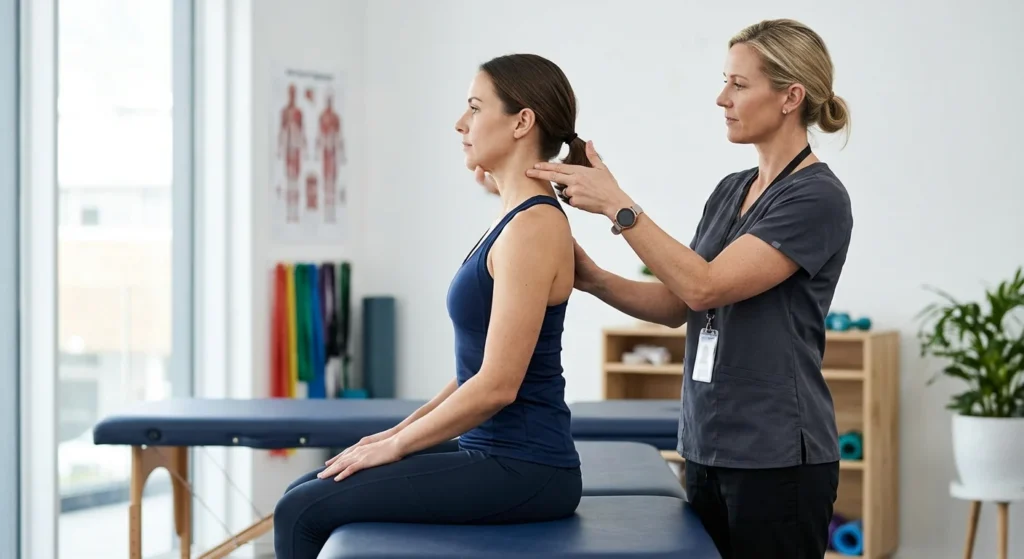
Exercises are much more effective when your desk setup supports them. Raise your screen so you are not constantly looking down. If you use a laptop for long sessions, use a stand with a separate keyboard and mouse. Keep the mouse close enough that the shoulder stays relaxed. Support your feet. Sit back into the chair rather than perching at the front for hours.
There is no single perfect desk position. Your best posture is your next posture. Change position regularly. Stand for phone calls, walk between tasks, move the neck and shoulders before tension builds. A good setup reduces strain, but movement breaks make it sustainable.
Phone Habits Matter Too
Phone use is a major contributor for many people. Looking down at a phone for long periods places the neck in a sustained flexed position. Try raising the phone closer to eye level, using voice notes when practical and taking short breaks from scrolling. These changes sound small, but repeated daily habits add up.
If your symptoms are worse at night or first thing in the morning, review evening phone posture as well as office setup. Many people fix the desk and then spend two hours on the sofa looking down at a phone. The neck counts both.
A Five-Minute Posture Routine
Use this routine once or twice daily, and add shorter movement breaks during desk work. Keep the exercises easy enough that you can do them consistently. A routine you actually do beats a perfect routine that feels too long.
- Chin tucks: 8 repetitions.
- Thoracic extension over chair: 6 repetitions.
- Shoulder blade retractions: 10 repetitions.
- Band pull-aparts: 8 to 12 repetitions.
- Doorway pec stretch: 20 seconds each side.
- One minute walking away from the screen.
If symptoms improve, continue and gradually add strength. If symptoms flare, reduce volume and focus on the gentler mobility work. If symptoms do not change after two weeks, an individual assessment may reveal a missing factor.
Why Strength Is Part Of Posture Correction
Many posture routines focus only on stretching. Stretching can feel good, but posture is also an endurance task. Your neck and upper back need enough strength to support you through real work demands. That is why resistance band work, rows, controlled shoulder exercises and progressive strengthening often matter.
Start light. The aim is not bodybuilding; it is capacity. If a muscle can only tolerate ten minutes of desk load before feeling tired, no amount of posture reminders will solve the problem. Build the capacity and the posture becomes easier to maintain without constant effort.
When To See A Physiotherapist
See a physiotherapist if neck or shoulder pain keeps returning, affects sleep, travels into the arm, causes headaches, or does not improve with sensible exercise and desk changes. Assessment can identify whether symptoms are mainly posture-related, joint-related, muscle-related, nerve-related or shoulder-driven.
Treatment may include manual therapy for stiffness, exercise prescription for strength and endurance, and practical advice for your workstation and daily routine. The plan should fit your work, not assume you can stop using a computer.
How To Progress Posture Exercises
Progression should be gradual. Start with awareness and mobility, then add endurance, then add strength. If chin tucks feel easy, hold each repetition for five seconds or perform them lying down with gentle control. If shoulder blade retractions feel easy, progress to light band rows. If thoracic extension feels comfortable, add open-book rotations or controlled wall slides.
Do not progress by forcing a more extreme posture. Progress by improving control and tolerance. You should be able to breathe, keep the jaw relaxed and move without neck strain. If a strengthening exercise makes the upper neck tighten, reduce the resistance or change the angle. The target is usually the upper back and shoulder girdle, not constant neck effort.
A Four-Week Desk Posture Plan
In week one, focus on awareness and reducing the biggest aggravating habit. Raise the screen, bring the mouse closer and take one movement break every hour. In week two, add the five-minute posture routine once daily. In week three, add light resistance work two or three times per week. In week four, review what changed: neck pain, shoulder tension, headaches, concentration and end-of-day fatigue.
This structure works because it avoids changing everything at once. If you try to overhaul your entire workstation, posture, exercise routine and gym programme in one day, it often becomes too much to maintain. Small changes done consistently are easier to keep during a normal working week.
Sleep, Stress And Recovery
Forward head posture and neck tension are often worse when sleep is poor or stress is high. This does not mean symptoms are imaginary. It means the nervous system and muscles are more sensitive. If you clench the jaw, lift the shoulders or breathe shallowly when concentrating, the neck can stay active all day even if your desk setup is reasonable.
Use short resets. Relax the tongue and jaw, breathe slowly into the lower ribs, drop the shoulders and do two gentle chin tucks. Before bed, avoid long phone sessions with the head bent forwards. If morning stiffness is frequent, review pillow height and sleeping position. Recovery habits make posture exercises easier to tolerate.
Common Mistakes With Posture Correction
The first mistake is trying to sit perfectly still and upright all day. That often creates more tension because the muscles are working constantly. The second mistake is stretching the chest and neck every day without strengthening the upper back. Stretching may feel good, but endurance is what helps you manage long desk sessions.
The third mistake is blaming every symptom on posture. Neck pain can also involve joints, nerves, shoulders, headaches, stress, sleep and training load. If symptoms are persistent, travelling into the arm or not responding to sensible changes, assessment is worthwhile. The fourth mistake is expecting posture to change without changing the environment. A low laptop screen will keep pulling you back into the same position.

How To Measure Progress
Use practical markers rather than photos alone. Can you work for longer before neck tension builds? Are headaches less frequent? Do you need fewer painkillers? Can you drive or study with fewer breaks? Does the neck feel less stiff when you wake? These changes matter more than whether one posture photo looks perfect.
Photos can still help if used carefully. Take a relaxed side photo once every few weeks, not every day. Daily checking can make you over-focus on posture and increase tension. The aim is better comfort, strength and confidence, not a flawless line on a screen.
When Posture Exercises Need Individual Advice
If exercises cause dizziness, arm tingling, worsening headaches or sharp pain, stop and get advice. If you have a history of significant neck injury, inflammatory conditions or neurological symptoms, a generic posture routine may not be enough. Individual assessment can identify which movements are helpful and which should be avoided.
A physiotherapist can also tailor the plan to your job. A designer, driver, student, hairdresser and gym user all load the neck differently. The best posture plan fits the work and hobbies you actually do, rather than assuming everyone only needs the same two stretches.
Advanced Exercises For Stronger Posture
Once symptoms are controlled, posture work can become more strength-based. Resistance band rows, face pulls, prone Y raises, controlled carries and light overhead work can build the upper-back and shoulder endurance needed for long days. These exercises should be introduced with good technique and without shrugging. If the neck takes over, reduce the load.
For gym users, posture correction does not mean avoiding strength training. It means choosing exercises that help the shoulders and upper back support the neck. Rows, pulldowns, presses and carries can all be useful when loaded appropriately. Progress gradually and keep the neck relaxed rather than jutting the chin forward during effort.
Posture At Work, In The Car And At Home
Many people fix their desk but forget the rest of the day. Driving, sofa posture, phone use and hobbies can all reinforce forward head posture. In the car, bring the seat close enough that you are not reaching with rounded shoulders. At home, avoid spending the evening looking down at a phone after a full day of screen work.
The solution is not rigid posture in every setting. It is awareness and variation. Change position, support the arms where useful, raise screens when practical and use short movement breaks. The neck responds well when it gets more variety across the whole day.
Small Habits That Make A Big Difference
Small habits matter because posture is repeated thousands of times. Put the laptop on a stand for longer sessions. Bring the phone up instead of dropping the head down. Stand during some calls. Walk after focused work blocks. Keep a resistance band near the desk so posture work is easy to do rather than another task to remember.
It also helps to link exercises to existing routines. Do chin tucks after brushing your teeth, thoracic extensions after lunch, and band pull-aparts before finishing work. Habit pairing makes consistency easier. The exercises do not need to dominate your day; they need to appear often enough to change what your body expects.
Why Posture Advice Should Feel Encouraging
Many people feel blamed when posture is mentioned, as if they caused their pain by sitting badly. That is not helpful. Posture is influenced by work demands, equipment, fatigue, eyesight, stress and habit. The purpose of posture advice is not blame. It is to give you more options and reduce repeated strain.
Forward head posture is usually changeable. Even when it has been present for years, people can often improve comfort, strength and awareness with a realistic plan. Progress may be gradual, but it is absolutely worth pursuing when neck and shoulder strain are affecting daily life.
The best results usually come from combining three things: a better environment, regular movement and progressive strength. A screen at a better height reduces repeated strain. Movement breaks stop the neck from staying in one position too long. Strength gives the upper back and shoulders the capacity to support you when work gets busy.
That combination is more realistic than trying to sit perfectly all day. It gives you choices, and choices are what make posture feel less like a rule and more like something your body can manage naturally.
If symptoms return during busy periods, restart with the basics rather than blaming yourself. Raise the screen, move regularly, reduce phone strain and rebuild the short exercise routine. Posture improvement is a skill that can be refreshed whenever your workload changes. Small resets still count.
FAQs About Forward Head Posture Exercises
Can forward head posture be corrected?
It can often be improved with exercise, mobility, strength and habit changes. The goal is not perfect posture all day, but more movement options and less strain.
How long do posture exercises take to work?
Some people feel looser immediately, but lasting change usually takes several weeks of consistent practice and desk habit changes. Strength and endurance take time to build.
Are chin tucks enough?
Chin tucks are useful, but they are rarely enough alone. Upper-back mobility, shoulder strength, desk setup and movement breaks usually need attention too.
Can posture cause headaches?
Neck tension and sustained posture can contribute to some headaches. However, headaches have many causes. Seek medical advice for sudden, severe, unusual or worsening headaches.
Book A Posture And Neck Pain Assessment
If forward head posture, desk strain or neck tension is affecting your day, Prime Physiotherapy Clinic can assess your movement, workstation habits and strength. We can build a realistic plan using physiotherapy assessment, manual therapy and exercise prescription. You can book online when you are ready.