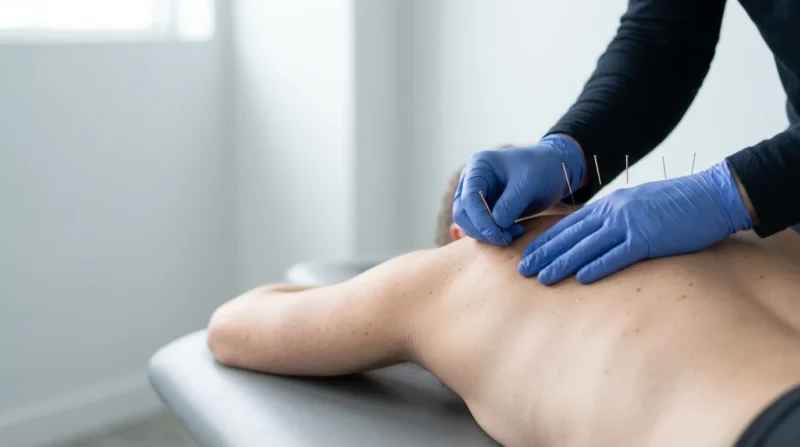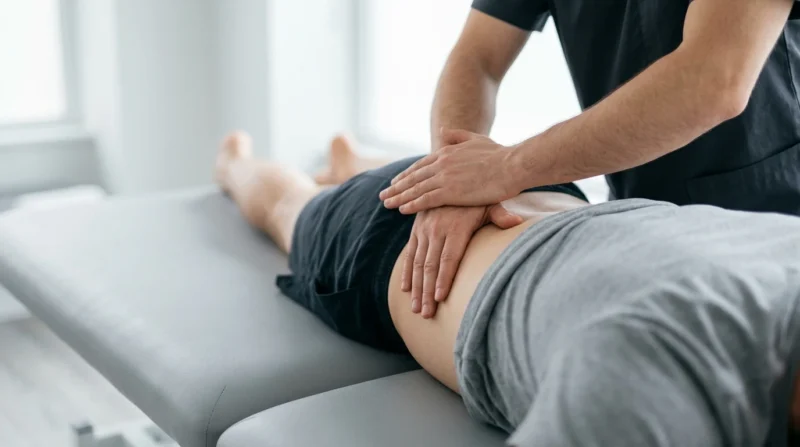


Physiotherapist's thumbs pressing a tender knot next to the shoulder blade of someone lying on a treatment couch
Our Services

Muscle & Trigger Point Therapy in Birmingham

Hands-on trigger point therapy for tight, tender muscle knots, given by a physiotherapist on Hagley Road: 45 minutes for £50, no GP referral required.

  • Given by a physiotherapist
  • £50 for 45 minutes
  • No GP referral needed
  • Open 7 days, 9am–9pm
Physiotherapist's fingers finding a tight muscle between the neck and shoulder of a seated person

Trigger Point Therapy Birmingham: Hands-On Treatment from a Physiotherapist

At Prime Physiotherapy Clinic on Hagley Road, a physiotherapist gives trigger point therapy in Birmingham. Expect steady pressure on tender spots in tight muscles, then stretching and movement.

A check of the muscles and movements involved guides each session, and you get ways to manage the cause, not just the sore spot. Each appointment, the first included, is £50 for 45 minutes, with no GP referral needed.


Physiotherapist pressing a trigger point in a person's forearm muscle

What Are Trigger Points?

A trigger point is a tender spot in a tight band of muscle, often called a muscle knot. Pressing it can hurt there and sometimes elsewhere (referred pain).

So what is trigger point therapy? Myofascial trigger point therapy works on these spots with sustained pressure and stretching (myofascial: muscle and its connective tissue). It may help, but how trigger points form is not fully understood, and the UK advertising regulator has not seen robust evidence for myofascial release.

For low back pain, NICE guidance says soft tissue techniques should only be used alongside an exercise programme.

£50 for 45 minutes with a physiotherapist

No GP referral needed · Open 7 days, 9am–9pm · Edgbaston, by Five Ways

Physiotherapist's fingers pressing a tight knot in a seated person's upper shoulder muscle

What Happens During Trigger Point Therapy

Your 45 minutes start with questions about your symptoms, health and medical history, then a movement check. Wear comfortable clothes you can move in, such as shorts, a T-shirt and trainers; only the area being treated is uncovered.

Your physiotherapist holds steady pressure on each tender spot with a thumb or fingers: firm and localised, eased if you say it is too strong. Myofascial release (a slow, sustained hold on muscle and surrounding tissue) and stretching may follow.

Massage covers larger areas: see sports or deep tissue massage and our deep tissue vs sports massage guide. Dry needling may be added in the same visit, with your consent (see acupuncture and dry needling); injections are not offered.

Person at a desk rubbing a tight muscle at the top of the shoulder

Who Trigger Point Therapy May Help

It may help muscle tension and aches, such as:

  • neck and shoulder tension from sitting at a desk
  • knots in the upper back
  • lower back muscle aches or spasm
  • aching muscles after sport or training

For a stiff joint, manual therapy may suit you better; after an injury or if unsure, start with a physiotherapy assessment. Desk-bound? See our neck exercises for desk workers.

Physiotherapist's fingers checking the pulse at the wrist of a person sitting on a treatment couch

When to Get Medical Help Instead

Get medical help instead of trigger point therapy for:

  • a sprain or strain from the last couple of days: the NHS advises no massage yet
  • a painful, swollen leg that could be a clot (DVT): urgent GP or NHS 111, or 999 with breathlessness or chest pain
  • back pain with both legs numb or weak, loss of feeling around the genitals or bottom, or bladder or bowel changes: A&E or 999
  • a sudden, extremely painful headache, or one with numbness, confusion or loss of vision: A&E or 999
  • sudden or very bad shoulder pain, or pain after a fall: urgent GP or NHS 111

Use 999 in emergencies and NHS 111 if unsure where to go. NHS pages checked on 19 October 2026; general information, not a diagnosis.

Hand holding a phone above a tidy desk with a closed diary and a pen

Price, Booking and Getting Here

Each visit costs £50 for 45 minutes, the first included: self-pay, no packages, no GP referral. If you cancel within 24 hours of your visit, you may pay the full fee.

  1. Book trigger point therapy online: say where it hurts and which time of day suits you.
  2. We contact you to agree a day and time.
  3. Or call or WhatsApp us.

Find us in Edgbaston at Suite 3A, Cobalt Square, 83-85 Hagley Road, Birmingham B16 8QG (map on our contact page):

  • Trams stop opposite, at Edgbaston Village; Five Ways train station is walkable too.
  • Parking: Broadway Plaza car park, roughly a 4-minute walk (none on site).
  • Step-free with lifts; open 7 days, 9am–9pm.

Why Choose Muscle & Trigger Point Therapy

Hands-on treatment from a physiotherapist

Focused pressure on the tender spot

You set the pressure, and can change it any time

Stretches and self-care advice for home

£50 for each 45-minute appointment

No referral needed, open every day 9am to 9pm

Your Treatment Journey

1

Questions first

Your symptoms, general health, medical history and what you would like to do more easily.

2

Find the tender spots

We look at how the area moves, then press gently to locate tight bands in the muscle.

3

Trigger point release

Steady pressure, myofascial release and stretching, kept at a level you can tolerate.

4

Plan for home

Simple stretches, movement and posture advice, and whether another treatment may suit you better.

Frequently Asked Questions

What is a trigger point?

A trigger point is a sensitive spot in a taut band of muscle, often felt as a small knot. It can cause pain on the spot and further away (referred pain), and limit movement.

Is trigger point therapy painful?

It can be uncomfortable, because the pressure is firm and on a spot that is already tender. Say how it feels and your physiotherapist eases the pressure to a level you can tolerate.

Does trigger point therapy work?

It may help muscle aches, tension and spasm, but research on trigger points is still debated, so no result is promised. For low back pain, NICE says hands-on soft tissue work should only be used within a treatment plan that includes exercise.

Is trigger point therapy the same as massage or myofascial release?

Not exactly. Massage works over larger areas of muscle; trigger point therapy holds steady pressure on small tender spots, and both may be used. Myofascial release, a slow hold on muscle and surrounding tissue, may also be part of the visit.

How many trigger point therapy sessions will I need?

We do not set a number in advance. Your physiotherapist reviews your plan and progress at every visit, then explains whether to continue, add exercises or try another treatment.

How much does trigger point therapy cost?

A 45-minute appointment costs £50, the first included. You pay for each visit yourself: no packages, no insurance billing. If you cancel with under 24 hours' notice, you may pay the full fee.

Can I book without seeing my GP first?

Yes: you can book trigger point therapy on its own, with no GP referral. The 45 minutes start with health questions and a check of the painful area.

Do you use dry needling or injections for trigger points?

Dry needling may be added within the same £50, 45-minute visit if your physiotherapist thinks it may help and you agree. Our Acupuncture & Dry Needling page explains it. We do not offer trigger point injections.

Can I get trigger point therapy on the NHS?

In many areas, you may be able to get physiotherapy from NHS community musculoskeletal (MSK) services without a GP referral. We are a private clinic: trigger point therapy here is self-pay, £50 for 45 minutes.

Book Trigger Point Therapy in Birmingham

Choose a time online, ring us or message us on WhatsApp: a 45-minute appointment with a physiotherapist costs £50, any day 9am to 9pm.