Deep tissue massage vs sports massage is a common comparison because the two treatments can look similar from the outside. Both involve hands-on soft tissue work. Both may use firm pressure. Both can help people who feel tight, sore or restricted. The difference is not simply that one is harder and one is for athletes. The real difference is the goal, the assessment behind the treatment and how the massage fits into a wider recovery or performance plan.
If you are searching because your back feels tight, your legs feel heavy after training, your neck and shoulders are tense from work, or you are preparing for an event, this guide will help you understand which option may suit you. It also explains when massage alone is not enough and when a physiotherapy assessment is the better first step.
What Is Deep Tissue Massage?
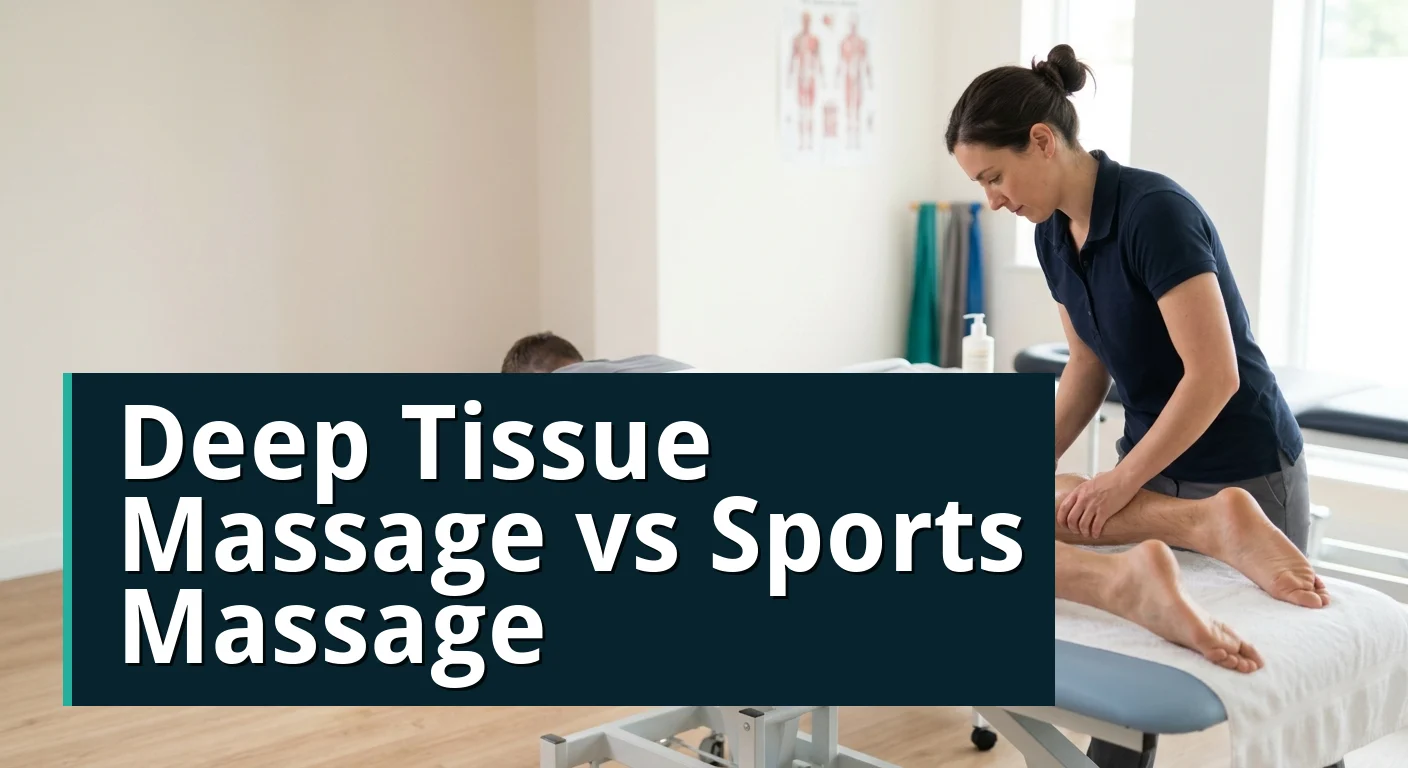
Deep tissue massage is a style of massage that uses slower, firmer pressure to work into deeper layers of muscle and connective tissue. It is often used for general muscle tension, persistent tightness, stress-related guarding and areas that feel dense or restricted. The therapist may use hands, thumbs, forearms or elbows depending on the area and the person’s tolerance.
The phrase deep tissue does not mean the treatment should be painfully aggressive. Good deep tissue work is specific and controlled. Pressure should feel useful, not overwhelming. If you are holding your breath, tensing your whole body or waiting for it to end, the treatment is probably too strong for that moment.
Deep tissue massage is often chosen by people who feel chronically tight in the neck, shoulders, back, hips or legs. It may help reduce muscle tone, improve comfort and create a window where movement feels easier. However, if the same tightness keeps returning, the underlying driver may need attention through posture changes, strengthening, workload management or physiotherapy.
What Is Sports Massage?
Sports massage is soft tissue treatment used to support training, recovery, performance or return from activity-related tightness. Despite the name, you do not need to be an elite athlete. It can be useful for runners, gym users, footballers, cyclists, office workers who train recreationally and anyone whose muscles are dealing with repeated physical load.
The key difference is that sports massage is usually more goal-directed. The treatment may be planned around a training block, competition date, sore muscle group, recovery need or movement restriction. It may include soft tissue techniques, stretching, trigger point work, movement advice and a short plan for what to do after the session.
At a physiotherapy clinic, sports massage can also sit alongside assessment and rehab. If pain is more than simple muscle soreness, the clinician can check whether there is a joint, tendon, nerve or strength issue that needs a different approach. That is one of the advantages of physiotherapy-led soft tissue care.
Deep Tissue Massage vs Sports Massage: The Main Differences
- Purpose: deep tissue massage often focuses on persistent muscle tension; sports massage focuses on activity, recovery and performance needs.
- Assessment: sports massage in a physio setting may include movement screening and load discussion.
- Timing: sports massage may be planned before or after training events; deep tissue massage is often chosen for general tension relief.
- Techniques: both may use firm pressure, but sports massage may include more movement-based techniques.
- Aftercare: sports massage often includes activity advice, warm-up, recovery or rehab suggestions.
There is overlap. A sports massage may use deep tissue techniques. A deep tissue session may help an active person recover. The label matters less than whether the therapist understands your goal and adapts treatment to your body, sport, work and symptoms.
Which One Is Better For Muscle Tightness?
If your main issue is general muscle tightness from stress, desk work or daily life, deep tissue massage may be enough to help you feel looser and more comfortable. It can be particularly useful for areas such as the upper back, shoulders, glutes and calves, where people often hold tension.
If tightness is linked to training, running, sport or repeated overload, sports massage may be the better fit because it can be linked to activity planning. For example, tight calves in a runner may not only need massage. They may need calf strengthening, running load changes and recovery advice. Massage can help symptoms, but the training plan decides whether they return.
If tightness is actually protective muscle guarding around pain, massage should be used carefully. A muscle may feel tight because it is protecting a joint, nerve or tendon. In that case, heavy pressure might give temporary relief while missing the reason the muscle is guarding in the first place.
Which One Is Better Before Sport?
Before sport, treatment should usually be lighter, more stimulating and less likely to leave soreness. Pre-event sports massage may use faster techniques, mobility work and activation-style preparation. It is not the time for a very heavy deep tissue session that leaves the legs feeling bruised or tired.
If you have an event coming up, avoid trying a new intense massage style the day before. Your body may respond with soreness, fatigue or temporary reduced performance. If massage is part of your event preparation, test it during training weeks so you know how you respond.
Which One Is Better After Training?
After training or competition, sports massage may help reduce the feeling of heaviness, improve comfort and support relaxation. It should match the level of soreness. Very heavy pressure on already sore muscles is not always helpful. The goal is recovery, not proving pain tolerance.
Deep tissue techniques may be used later in the recovery week when soreness is lower and a specific area still feels restricted. Again, the timing and dose matter. A good therapist will ask about your training schedule before choosing pressure and technique.
Does Massage Remove Knots?
People often describe muscle knots as small tight points that feel tender or refer discomfort. Massage can reduce sensitivity in these areas and help the muscle relax, but the idea of permanently breaking up knots is too simplistic. Tender points often return if the same load, posture, stress or weakness remains.
Trigger point therapy, stretching, strengthening and movement changes may all play a role. If you repeatedly need the same knot treated every few weeks, it is worth asking why that area is doing so much work. A physiotherapy assessment can help identify the driver.
How Much Pressure Should Massage Use?
Pressure should be based on your goal, tissue sensitivity and response. More pressure is not automatically better. Useful pressure often feels strong but controlled, with a sense that the body can relax into it. If you are bracing, sweating or feeling sharp pain, the pressure may be too much.
A simple scale can help. Pressure around 5 to 7 out of 10 may be appropriate for some areas, but highly sensitive tissue may need less. You should feel able to communicate during treatment. A good therapist will adjust rather than insist that pain is necessary.
When Massage Is Not Enough
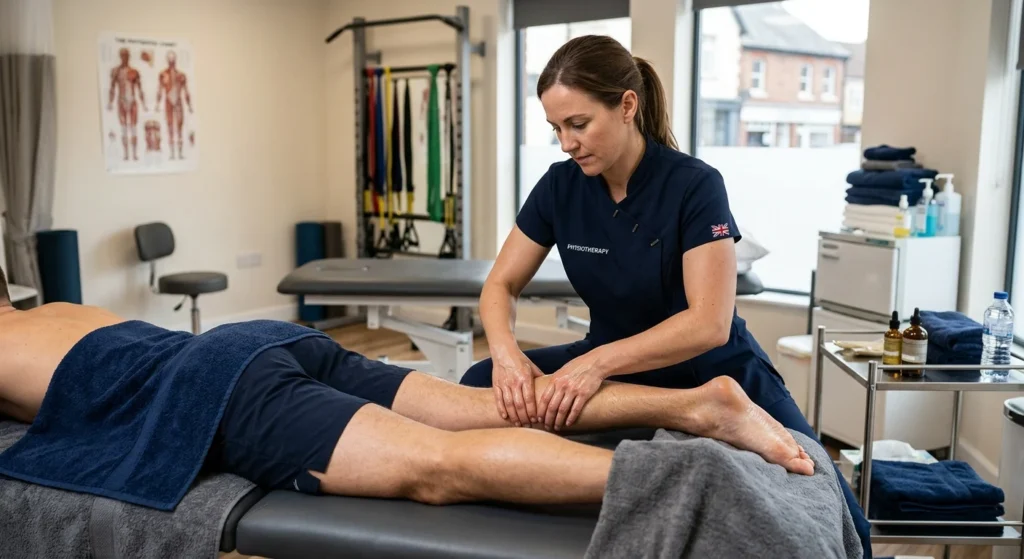
Massage may not be enough if pain keeps returning, if symptoms include pins and needles or numbness, if you have weakness, if pain follows trauma, or if a specific movement repeatedly triggers symptoms. In these cases, the issue may involve a tendon, joint, nerve, strength deficit or training-load problem.
For example, lateral hip pain in a runner may feel like tight glutes, but it might need tendon loading. Recurrent calf tightness may need calf strength and running load management. Neck tension may need workstation changes and upper-back strengthening. Massage can still help, but it should be part of a plan.
What To Expect At Prime Physiotherapy Clinic
At Prime Physiotherapy Clinic, sports massage and soft tissue work are guided by your symptoms and goals. We ask about your training, work, pain pattern, injury history and what you want to get back to. If massage is appropriate, we use pressure and technique that match your tolerance. If a different service is more suitable, we explain why.
Soft tissue treatment may be combined with manual therapy, trigger point therapy, stretching, strengthening or exercise prescription. For active people, it can also link with return-to-sport or recovery planning.
How To Choose Between Them
Choose deep tissue massage if your main goal is relief from general muscle tension, stress-related tightness or a feeling of restriction that is not strongly linked to sport or injury. Choose sports massage if your symptoms are connected to training, recovery, event preparation, running, gym work or sport-specific muscle overload.
Choose physiotherapy assessment first if you have pain rather than simple tightness, if symptoms keep returning, if movement is restricted, if there is weakness or if you are unsure what is causing the problem. The assessment can then decide whether massage, manual therapy, exercise or another pathway is best.
What A Good Massage Appointment Should Include
A good massage appointment should start with questions. The therapist should ask why you have booked, where you feel symptoms, how long they have been present, what makes them better or worse, what activity you do and whether there are any medical considerations. This matters because the same tight calf can mean different things in different people. It might be training fatigue, tendon irritation, nerve sensitivity or simple post-exercise soreness.
The session should also include a pressure agreement. Some people like firm pressure, while others need a gentler approach. Neither is wrong. Useful pressure should allow you to breathe normally and relax into the treatment. If you are bracing through the whole session, the nervous system may treat the treatment as another threat rather than something helpful.
After treatment, you should leave with clear advice. That might include hydration, gentle movement, avoiding unusually heavy training for the rest of the day, or doing specific mobility and strengthening exercises. If the therapist finds signs that need physiotherapy assessment, they should explain that clearly instead of simply repeating massage every week.
Pressure, Soreness And Recovery After Massage
Mild soreness after deep tissue massage or sports massage can be normal, especially if the area was sensitive or the pressure was firm. It should usually feel like post-exercise soreness rather than sharp pain. Symptoms should settle over the next day or two. If you feel bruised, unwell, unusually painful or worse for several days, the treatment may have been too intense or the problem may need reassessment.
Recovery advice depends on the goal. After a relaxation-focused deep tissue session, gentle walking and normal activity may be enough. After a sports massage during a training block, you may need to plan around key sessions. Avoid scheduling heavy treatment immediately before a race, match or personal-best attempt unless you already know how your body responds.
Massage For Desk Workers
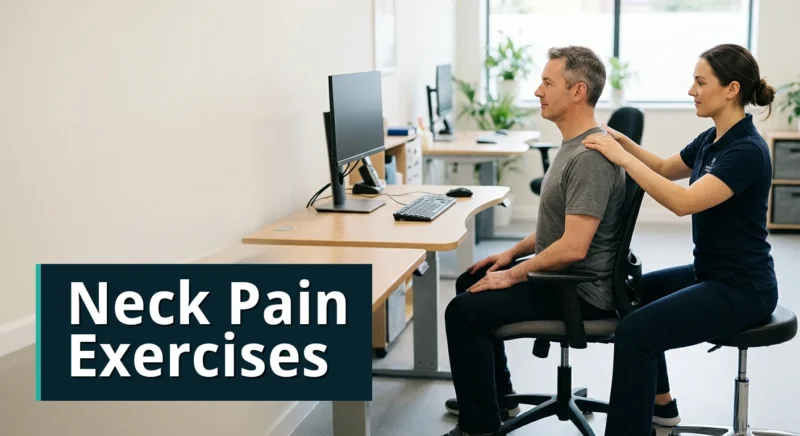
Desk workers often book massage for neck, shoulder and upper-back tension. Deep tissue massage can reduce discomfort and make movement feel easier, but it should not be the only strategy if symptoms return every working week. Screen height, mouse position, chair support, work breaks, stress and upper-back strength all affect how quickly tension returns.
A useful plan may combine soft tissue work with neck mobility, shoulder blade strengthening and practical desk changes. For example, if the upper trapezius always feels tight, the issue may be that the shoulders are held slightly raised for hours. Massage can calm the muscle, but lowering the keyboard, moving the mouse closer and building shoulder endurance may stop the same pattern from repeating so quickly.
Massage For Runners, Gym Users And Active Adults
Active adults often use sports massage for heavy legs, tight calves, hip stiffness or shoulder tension from training. This can be useful, especially during high-load blocks, but it should fit around training. If you are preparing for an event, massage may be lighter and timed to support recovery. If you are in an off-season or lower-load week, deeper work may be tolerated better.
Sports massage should also raise useful questions. Why are the calves repeatedly overloaded? Has running mileage increased too quickly? Is strength work missing? Are sleep and recovery poor? Is a shoe change involved? The treatment can help symptoms, but the answers to these questions often decide whether symptoms come back.
For knee pain in runners, strengthening exercise is usually the main treatment, with hands-on care alongside it rather than instead of it.
When Soft Tissue Work Should Be Part Of Physiotherapy
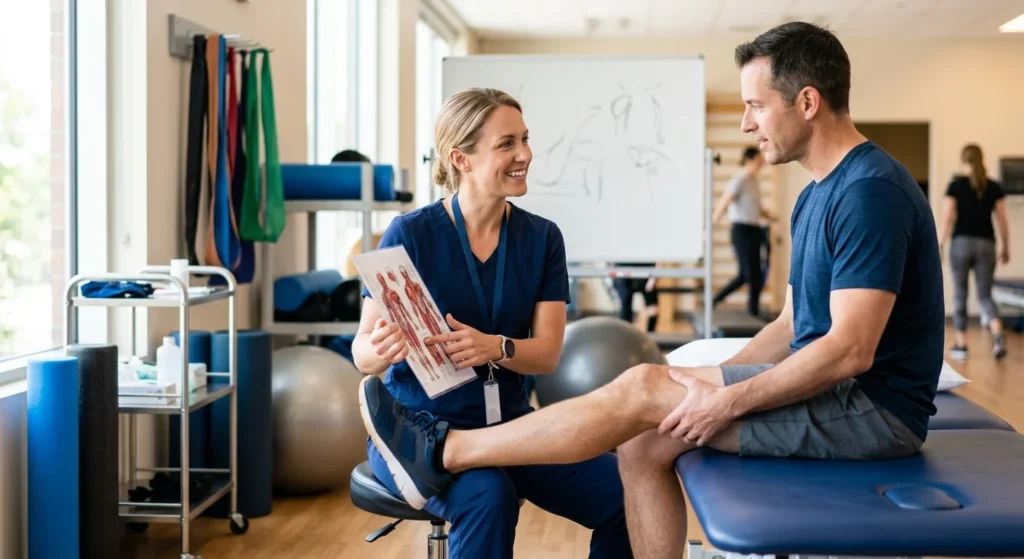
Soft tissue work is often most effective when it sits inside a physiotherapy plan. This is especially true when pain is recurrent, linked with injury, or stopping normal activity. A physiotherapist can check whether the painful area is the source of the problem or whether it is compensating for somewhere else. For example, hamstring tightness may be influenced by lower back sensitivity, and calf tightness may be linked to Achilles tendon load.
In this setting, massage is not treated as a cure-all. It is used to improve comfort, reduce guarding and create a better window for exercise. That window is then used for strength, mobility, balance, running progressions or work-specific loading. This is often more useful than repeatedly treating the same tight area without changing capacity.
Who Should Be Careful With Massage?
Massage is not suitable for every situation. Avoid massage over unexplained swelling, suspected fracture, active infection, unexplained calf swelling, recent deep vein thrombosis, open wounds, severe unexplained pain or areas where medical advice has told you not to receive treatment. Tell the therapist if you take blood-thinning medication, bruise easily, have a complex medical history or are pregnant.
Good treatment includes consent and adaptation. You should be able to ask for pressure to change, ask why a technique is being used and stop treatment if needed. Professional massage should feel purposeful and safe, not like something you have to endure.
How Often Should You Book Massage?
Frequency depends on the reason for treatment. For general tension, an occasional session may be enough. For active people in a heavy training block, massage might be scheduled around recovery weeks or important events. For pain that keeps returning, frequent massage without assessment may become expensive maintenance rather than progress. In that case, it is better to understand why symptoms keep returning.
A useful rule is to review after a small number of sessions. Are symptoms lasting longer between appointments? Is movement improving? Are you training or working with fewer flare-ups? If the answer is no, change the plan. That may mean adjusting pressure, adding strengthening, changing workload or moving from massage to physiotherapy assessment.
Choosing By Goal Rather Than Treatment Name
If your goal is to feel looser after a stressful month, deep tissue massage may be the right choice. If your goal is to recover between training sessions, sports massage may fit better. If your goal is to understand a recurring pain, start with physiotherapy. The name on the booking page is less important than matching the session to the outcome you need.
It is also fine to change direction. You may book sports massage and discover that a tendon problem needs rehab. You may book physiotherapy and discover that soft tissue treatment is a useful part of the plan. Good care is flexible. It should not force every person into the same treatment just because that is what they originally clicked.
Deep Tissue Massage vs Sports Massage: Quick Decision Guide
Choose deep tissue massage when the main goal is relief from general tightness, stress-related tension or a feeling of muscular restriction. Choose sports massage when the goal is linked to training, competition, recovery or activity-specific soreness. Choose physiotherapy when there is pain, weakness, recurring injury, reduced movement or uncertainty about what is causing the symptoms.
If you are still unsure, describe the problem in plain language when booking. For example: tight shoulders after desk work, heavy calves during half-marathon training, lower back pain after lifting, or hip tightness that keeps returning after runs. A good clinic can guide you towards the most appropriate appointment rather than leaving you to guess from treatment names.
What Makes Treatment Feel Professional?
Professional treatment feels clear. You understand why the therapist is working on a certain area, the pressure is adjusted to your tolerance, and the session has a purpose beyond simply pressing hard. You should be draped appropriately, asked for feedback and given aftercare that fits your activity level. The therapist should also know when to stop and recommend assessment.
The best massage outcome is not always feeling sore enough to prove something happened. It is feeling more comfortable, moving more freely and knowing what to do next. That next step may be rest, training modification, stretching, strengthening or a full physiotherapy assessment.
If you remember one thing, make it this: massage should be chosen for a reason. The right treatment is the one that matches your symptoms, your activity level and your goal. When the reason is clear, deep tissue massage and sports massage both become more useful.
That is why honest communication before and during the session is so important. Tell your clinician what you want from treatment, what pressure feels useful and what activities you need to return to. The clearer the goal, the easier it is to choose the right style and the right aftercare.
FAQs About Deep Tissue Massage vs Sports Massage
Is sports massage only for athletes?
No. Sports massage can help active people at any level, including recreational runners, gym users, weekend footballers and people with physical jobs. The treatment is based on activity demands, not elite status.
Is deep tissue massage more painful?
It can use firmer pressure, but it should not be painfully aggressive. Treatment should be strong enough to be useful and gentle enough that you can relax and breathe normally.
Which is better for recovery?
Sports massage is usually better when recovery is linked to training or competition because it can be planned around activity. Deep tissue massage may help more general muscle tension.
Can massage fix an injury?
Massage can help symptoms and movement, but injuries often need load management, strengthening and a return-to-activity plan. If pain persists, physiotherapy assessment is recommended.
Book Sports Massage Or Assessment
If you are unsure whether you need deep tissue massage, sports massage or physiotherapy, start with the goal: relief, recovery, performance or pain diagnosis. Prime Physiotherapy Clinic can help choose the right route. You can explore our sports massage and sports physiotherapy service or book an appointment online.