

Ankle sprain treatment should start with calming pain and swelling, but it should not stop there. Many ankle sprains feel better after a few days, yet the ankle remains weaker, less confident and more likely to roll again. Proper rehab in the first weeks can make the difference between a one-off injury and a recurring problem that keeps interrupting sport, work or daily life.
This guide explains what to do after an ankle sprain, when to seek medical assessment, which exercises to start with and how to progress towards walking, running and sport. It is written from a physiotherapy perspective for people with common lateral ankle sprains, but it is not a replacement for assessment. If you cannot take weight, have severe swelling, visible deformity, numbness or pain over the bone, seek medical advice.
What Is An Ankle Sprain?
An ankle sprain happens when the ligaments around the ankle are stretched or injured. The most common type is a lateral ankle sprain, where the foot rolls inward and the ligaments on the outside of the ankle are affected. This can happen during football, running, netball, uneven ground, stairs or simply stepping awkwardly.
Ligaments help provide stability and joint position sense. After a sprain, the ankle may feel painful, swollen, stiff and unreliable. Even after pain settles, balance and control can remain reduced. That is why rehab includes more than rest. The ankle needs to relearn strength, mobility and quick reactions.
When To Get An X-Ray Or Medical Advice
Some ankle injuries need imaging or medical review. Seek advice if you cannot take four steps, have severe pain over the bony points of the ankle or foot, have significant swelling or bruising, have numbness, the foot looks deformed, or pain is not improving. The Ottawa ankle rules are often used by clinicians to decide whether an X-ray may be needed.
If in doubt, get checked. A fracture, high ankle sprain or tendon injury may need a different plan. Trying to push through a more serious injury can delay recovery.
The First 48 Hours: Protect, Elevate And Move Gently
In the first couple of days, the aim is to protect the ankle from further injury while keeping safe movement where possible. Elevating the ankle can help manage swelling. Compression may help if comfortable. You may need to reduce walking, use supportive footwear or use crutches temporarily if weight-bearing is painful.
Gentle movement is usually helpful. Point and flex the ankle within a comfortable range, draw small circles and wiggle the toes. Movement supports circulation and reduces stiffness. Avoid forcing painful ranges or testing the injury repeatedly by rolling the ankle.
Ice can be used for short-term comfort if you find it helpful, but it is not the whole treatment. The ankle needs progressive loading to recover. Early care should create the conditions for rehab, not replace rehab.
Should You Rest Or Walk On A Sprained Ankle?
Walking depends on severity. If you can walk with a near-normal pattern and pain is manageable, gentle walking in supportive shoes may be fine. If you are limping heavily, pain is sharp or swelling increases quickly, reduce weight-bearing and seek advice. Limping for days can irritate other areas such as the knee, hip or back.
The goal is gradual exposure. You want the ankle to tolerate load again, but not so much that it flares. Short, frequent walks may be better than one long walk. Monitor swelling and pain later in the day and the next morning.
Ankle Sprain Exercises: Early Stage
Early exercises should restore comfortable movement and begin gentle muscle activation. Keep pain mild. If swelling increases significantly after exercise, reduce the dose.
1. Ankle Pumps
Sit or lie with the leg supported. Slowly point the toes away, then pull them towards you. Repeat 15 to 20 times. This encourages movement without heavy load and can help reduce stiffness.
2. Ankle Circles
Draw slow circles with the foot, staying within a comfortable range. Try 10 circles each direction. Do not force the direction that caused the sprain. The aim is gentle mobility, not stretching the injured ligament aggressively.
3. Alphabet Exercise
Use the big toe to draw letters of the alphabet in the air. Keep the movement slow and controlled. This is a simple way to explore different ankle movements without needing equipment.
4. Seated Heel Raises
Sit with feet flat. Lift the heels, pause, then lower. Repeat 10 to 15 times. This starts calf activation without full bodyweight demand. Progress to standing when walking is comfortable.
Middle Stage Rehab: Strength And Balance
Once walking is improving and swelling is controlled, rehab should progress. This stage is where many people stop too early because the ankle feels better. However, balance, strength and control are often still reduced. Skipping this stage increases the risk of another sprain.
5. Standing Heel Raises
Stand holding a wall or worktop. Rise onto both toes, pause, then lower slowly. Start with 2 sets of 10. Progress to single-leg heel raises when comfortable. Calf strength is important for walking, running and jumping.
6. Resistance Band Ankle Strength
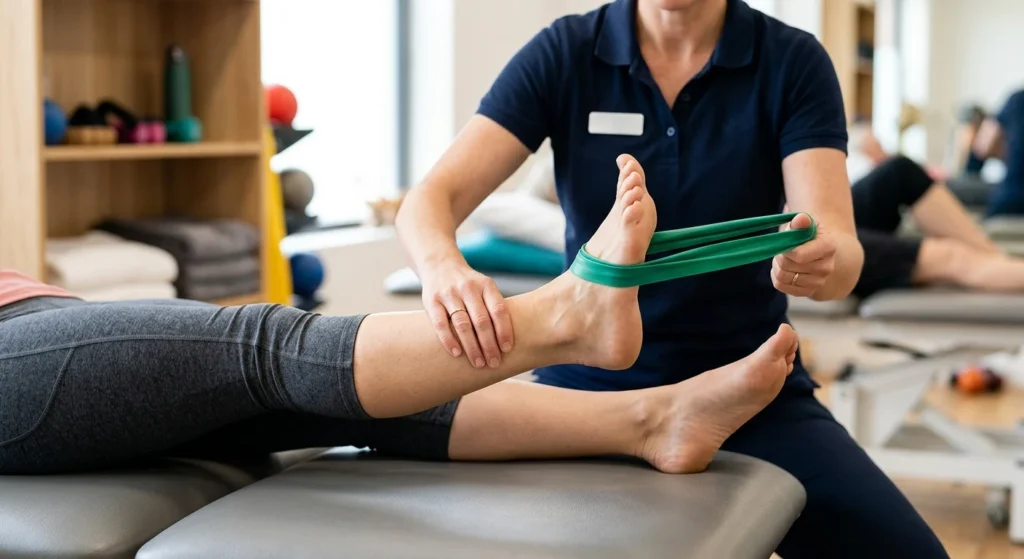
Use a light resistance band to move the ankle up, down, in and out. Work slowly and control the return. Start with 1 to 2 sets of 10 in each direction. The outward movement is especially relevant after a typical lateral ankle sprain, but all directions matter.
7. Single-Leg Balance
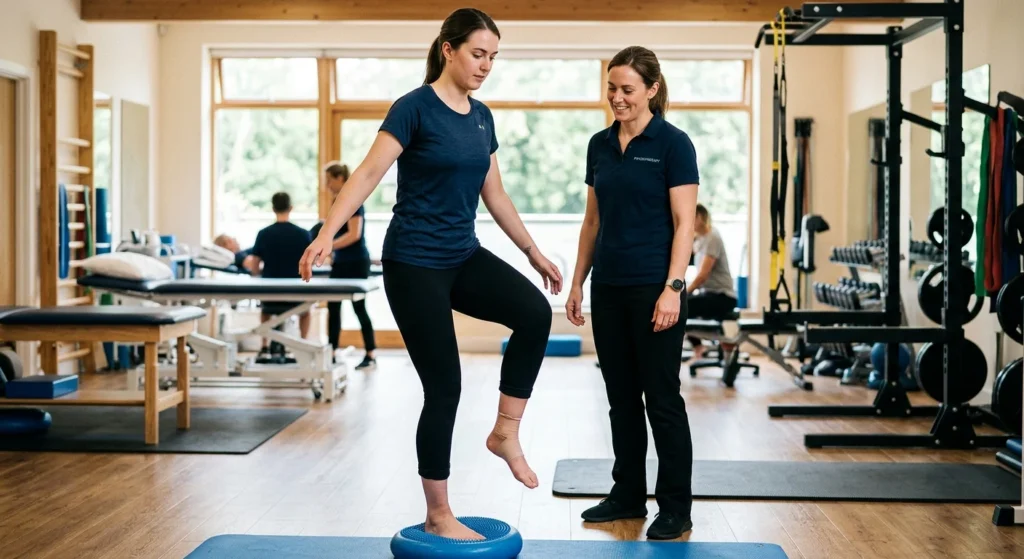
Stand on the affected leg near support. Aim for 20 to 30 seconds. Keep the foot active and the knee soft. Progress by turning the head, reaching with the other leg, closing the eyes briefly or standing on a cushion. Only progress when the previous level is controlled.
Balance training is essential because ankle sprains affect proprioception, which is your sense of joint position. If proprioception remains poor, the ankle may not react quickly enough when you step on uneven ground or change direction.
Late Stage Rehab: Running, Jumping And Direction Change
Returning to sport requires more than walking without pain. The ankle must tolerate speed, impact, cutting and unexpected movement. Late-stage rehab should include progressive hopping, landing, agility and sport-specific drills when strength and balance are ready.
8. Small Hops
Start with small two-leg hops on the spot. Progress to single-leg hops only when pain, swelling and balance allow. Keep the landing quiet and controlled. Start with low volume, such as 2 sets of 10, and monitor the next-day response.
9. Lateral Steps And Bounds
Side-to-side control is important because many sprains happen during cutting or uneven movement. Start with slow lateral steps, then progress to small side bounds. Focus on knee and ankle alignment. Do not let the ankle collapse outward on landing.
10. Sport-Specific Drills
Football, netball, running and racket sports all place different demands on the ankle. Return gradually. Start with straight-line jogging, then gentle changes of direction, then faster drills, then controlled practice, then match intensity. Skipping steps may feel fine until the ankle is challenged unexpectedly.
Should You Use An Ankle Brace?
An ankle brace or taping can be useful short-term, especially during return to sport or on uneven ground. It may improve confidence and reduce the risk of rolling the ankle again while rehab catches up. However, a brace should not replace strength and balance work.
If you feel unable to do anything without a brace months later, it may be a sign that rehab was incomplete. The goal is to build an ankle that is strong and responsive, with bracing used strategically rather than permanently for every task.
What To Avoid After An Ankle Sprain
- Avoid returning to sport just because walking is pain-free.
- Avoid ignoring swelling that increases after activity.
- Avoid stretching the injured ligament aggressively in the early stage.
- Avoid limping for days without support or assessment.
- Avoid skipping balance and hopping work before return to sport.
How Physiotherapy Helps Ankle Sprain Rehab
Physiotherapy helps by identifying the grade and behaviour of the injury, checking whether further medical assessment is needed and building a staged rehab plan. Treatment may include swelling advice, mobility work, strengthening, balance training, manual therapy, taping or bracing advice and return-to-sport testing.
At Prime Physiotherapy Clinic, ankle sprain rehab can sit within sports injury treatment and exercise prescription. The aim is not only to settle pain, but to restore confidence and reduce recurrence risk.
How Ankle Sprains Are Graded
Ankle sprains are often described as mild, moderate or severe. A mild sprain may involve slight ligament irritation, manageable swelling and relatively quick return to walking. A moderate sprain may involve more swelling, bruising, pain with weight-bearing and a longer rehab period. A severe sprain may involve significant ligament injury, instability, inability to take weight or concern about fracture or syndesmosis injury.
The grade helps guide expectations, but function matters too. Two people with similar swelling can recover differently depending on sport, work, previous ankle injuries, strength and confidence. A physiotherapy assessment can help decide whether the ankle is ready for the next stage rather than relying only on the number of days since injury.
Managing Swelling Without Stopping Rehab
Swelling is part of the healing response, but excessive swelling can limit movement and make the ankle feel heavy. Elevation, compression and gentle movement may help. Short walks can be useful if they do not increase swelling sharply. Long walks that create a swollen, throbbing ankle later in the day may be too much too soon.
Use swelling as feedback. If the ankle balloons after activity, reduce the dose and rebuild more gradually. If swelling is slowly decreasing and movement is improving, you are likely moving in the right direction. Complete rest until all swelling disappears is rarely necessary for a straightforward sprain, but uncontrolled activity can delay progress.
Return To Running After An Ankle Sprain
Before running, you should usually be able to walk briskly without limping, perform repeated heel raises, balance on the affected leg and complete basic hopping drills without a flare. Start on flat, predictable ground. A run-walk plan is often safer than jumping straight back to continuous running. For example, run one minute, walk one minute and repeat for ten rounds.
Review the ankle later that day and the next morning. If pain or swelling increases, reduce the total running time. If symptoms stay stable, increase gradually. Avoid trails, hills, speed work and sharp turns until straight-line running is comfortable. The ankle needs time to relearn impact and quick reactions.
Return To Sport: Confidence Is A Rehab Goal
Sport adds unpredictability. Football, netball, basketball and racket sports require cutting, landing, reacting and contact. Before full return, rehab should include acceleration, deceleration, side steps, hopping, landing and sport-specific drills. You should feel confident changing direction, not simply hopeful that the ankle will hold.
Confidence is built through exposure. Start with planned movements, then progress to reactive drills, then controlled training, then full sport. If you feel the need to protect the ankle during every drill, it may not be ready. A brace or tape can help during transition, but it should support rehab rather than replace it.
Preventing Another Ankle Sprain
The biggest risk factor for an ankle sprain is a previous ankle sprain. That is why prevention matters after symptoms settle. Balance training, calf strengthening, hip control and landing practice can reduce recurrence risk. These exercises do not need to take long, but they need to be done consistently enough to keep the ankle responsive.
Warm-ups should include more than jogging. Add ankle mobility, calf activation, single-leg balance, small hops and gradual changes of direction. If your sport involves cutting, include cutting in training before match day. The ankle adapts to what it practises.
Footwear, Bracing And Taping
Supportive footwear can help in the early stage, especially if the ankle feels unstable. Avoid loose shoes, unstable sandals or uneven ground while swelling and confidence are poor. In sport, taping or bracing may reduce recurrence risk for some people, particularly during the first phase of return.
However, support should not be the whole plan. If the ankle only feels safe when taped, strength and balance may still be incomplete. Use bracing strategically while continuing rehab. The long-term goal is an ankle that can respond quickly, absorb impact and tolerate the demands of your activity.
Common Mistakes After An Ankle Sprain
The first mistake is returning to sport as soon as walking feels fine. Walking is a low-level task compared with jumping and cutting. The second mistake is skipping balance work because it looks too simple. Proprioception is often affected after sprains, and balance drills rebuild the ankle’s reaction system.
The third mistake is ignoring repeated swelling. Swelling after every training session is a sign that the dose may be too high. The fourth mistake is doing only band exercises and never progressing to impact. Band work is useful, but sport requires landing, pushing off and reacting. A complete plan progresses from mobility to strength to balance to power and sport-specific movement.
Tests Before Full Return To Sport
Return-to-sport testing should include more than asking whether pain has gone. Useful markers include single-leg balance, repeated heel raises, single-leg hops, side-to-side hops, change-of-direction drills and confidence during sport-specific movements. The affected side should feel close to the other side, and swelling should not increase significantly afterwards.
Testing also reveals gaps. Someone may balance well but struggle with hopping. Another person may hop forward but feel unstable moving sideways. Those gaps guide the next stage of rehab. Returning to sport without testing is possible, but it leaves more to chance than necessary.
Recurrent Ankle Sprains And Instability
If your ankle keeps rolling, or if it feels unreliable months after injury, you may have ongoing instability or incomplete rehab. This does not always mean surgery or serious damage, but it does mean the ankle needs proper assessment. Strength, balance, joint mobility, foot control and confidence should all be reviewed.
Recurrent sprains can affect the knee, hip and lower back because the body starts protecting the ankle. You may avoid pushing off, land differently or lose confidence on uneven ground. A full rehab plan should restore the whole movement chain, not only the ankle joint.
If you run and develop knee pain around the kneecap, our runner’s knee guide covers the exercises that help.
How Long Should Rehab Continue?
Rehab should continue until the ankle can tolerate your real demands. For a mild daily-life sprain, that may be a few weeks. For sport, it may take longer because running, jumping and cutting need higher capacity. Pain-free walking is not the finish line for athletes or active adults. It is one checkpoint.
Keep a small prevention routine even after return. A few minutes of balance, calf strength and hopping drills in a warm-up can maintain the qualities that protect the ankle. The goal is not endless rehab; it is building a resilient ankle and then maintaining it with sensible habits.
What To Do If Recovery Stalls
If recovery stalls, first review the basics. Are you still limping? Is swelling increasing after activity? Have you progressed balance and strength, or are you only doing early mobility exercises? Are you returning to sport before the ankle can hop, land and change direction? A stalled ankle often needs a clearer progression, not just more rest.
Persistent pain may also suggest that something else is involved, such as a high ankle sprain, cartilage irritation, tendon involvement or an injury that was more significant than it first appeared. If symptoms are not improving as expected, physiotherapy assessment can help decide whether rehab needs adjusting or medical review is needed.
Building Confidence On Uneven Ground
Uneven ground is often the last thing to feel normal again. Start with controlled exposure. Walk on flat ground first, then grass, then gentle uneven paths. Add balance reaches, step-downs and small lateral hops in rehab before expecting the ankle to manage unpredictable surfaces outdoors. Confidence grows when the ankle has practised reacting safely.
If you hike, run trails or play field sports, uneven-ground preparation is essential. A clinic-based plan can recreate some of these demands with balance pads, direction changes and landing drills. The final goal is not just a pain-free ankle in the treatment room, but an ankle that feels trustworthy in the places you actually use it.
The practical message is that ankle sprain treatment has stages. Early care protects the injury and controls symptoms. Middle-stage rehab rebuilds movement, strength and balance. Late-stage rehab restores hopping, landing, running and sport-specific confidence. Missing any stage can leave the ankle vulnerable when life becomes unpredictable again.
If your ankle is improving, keep going until it can handle your normal demands. If it is not improving, get it assessed. The sooner the missing piece is found, the easier it is to return to walking, training and sport with confidence.
Good rehab should leave you with more than less pain. It should leave you with an ankle that feels stronger, reacts faster and gives you confidence on stairs, uneven ground, running routes and sport. That is the standard worth aiming for before full return to activity.
FAQs About Ankle Sprain Treatment
How long does an ankle sprain take to heal?
Mild sprains may improve over one to three weeks, while more significant sprains can take several weeks or months to fully rehabilitate. Return to sport depends on strength, balance and impact tolerance, not just pain.
Should I walk on a sprained ankle?
Walk only if you can do so with manageable pain and a near-normal pattern. If you cannot take weight or are limping heavily, seek advice and consider temporary support.
What exercises help ankle sprains?
Early mobility, calf raises, resistance band strengthening, balance work, hopping and sport-specific drills can all help when introduced at the right stage.
When should I see a physio?
See a physiotherapist if swelling or pain is significant, walking is difficult, the ankle feels unstable, you play sport, or symptoms are not improving. Seek medical advice first if a fracture is possible.
Book An Ankle Sprain Assessment
If an ankle sprain is stopping you walking, training or returning to sport confidently, structured rehab can help. Prime Physiotherapy Clinic can assess the injury, guide early care and build a return-to-sport plan. You can book an appointment online or learn more about sports injury treatment.