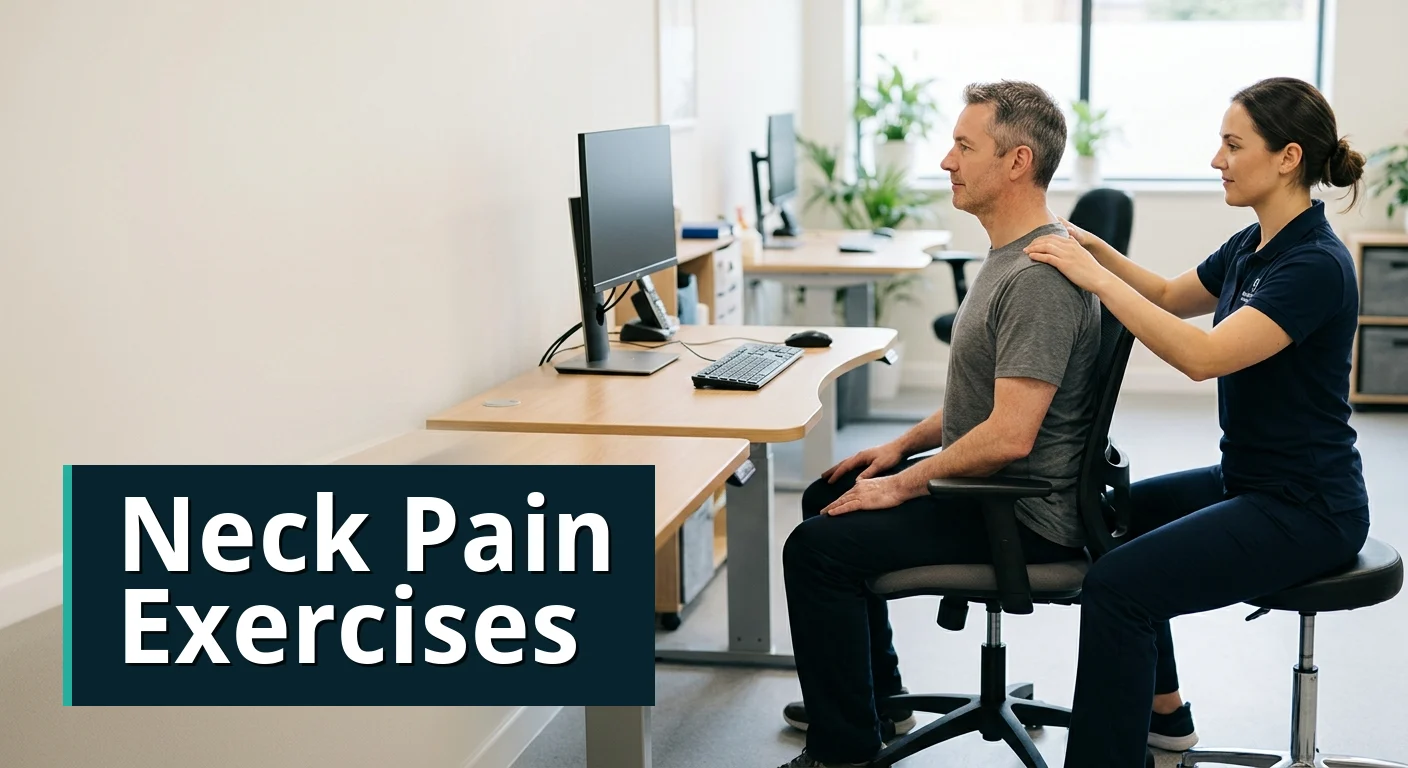
Neck pain exercises are most useful when they are matched to the reason your neck is sore. Desk posture, long driving, stress, poor sleep, a sudden awkward movement and reduced upper-back mobility can all create similar symptoms, but they do not always need the same plan. If you simply pull harder on the neck or repeat random stretches, you may get short-term relief without changing the habits that keep the pain returning.
This guide focuses on common neck pain patterns seen in desk workers, people waking with morning stiffness and those who feel neck and shoulder tension after long periods of sitting. It explains safe exercises, what to avoid, how to set up your desk and when physiotherapy assessment is worthwhile. If your neck pain follows a significant accident, comes with arm weakness, unexplained fever, severe headache, dizziness, visual disturbance or difficulty speaking, seek urgent medical advice.
Why Desk Work Causes Neck Pain
Desk work does not harm the neck because sitting is automatically bad. The problem is usually the amount of time spent in one position with limited movement variety. A slightly forward head position, rounded shoulders, elevated shoulders, a low laptop screen or a habit of leaning towards one side can all increase the demand on the muscles around the neck and upper back.
Neck muscles are designed to move and adjust, not hold the same position for hours. When they work at a low level for a long time, they can become tired and sensitive. The joints of the neck and upper back may also feel stiff because they have not moved through their normal range. This is why people often feel better after walking, stretching or changing position, even if the pain returns later.
Forward head posture is one common pattern, but it should not be treated as a moral failure. Many people adopt it because the screen is too low, the chair is unsupportive, the work is intense or the eyes are tired. Good treatment addresses the environment, movement habits, strength, stress and sleep rather than simply telling someone to sit up straight all day.
Why Your Neck May Hurt After Sleeping
Neck pain after sleeping is often linked to a sustained position rather than one dramatic injury. A pillow that is too high, too low or too soft can place the neck in a rotated or side-bent position for several hours. If the neck is already sensitive from desk work or stress, that sustained position may be enough to trigger morning stiffness.
Morning stiffness usually responds best to gentle movement, heat if it feels helpful and avoiding aggressive pulling first thing. The tissues are often more sensitive when you wake. Instead of testing the painful direction repeatedly, use easy movements to restore range gradually. If morning pain is severe, persistent or linked with arm symptoms, assessment is sensible.
Neck Pain Exercises: The Basic Rules
A good neck exercise should feel controlled. It may create mild stretch or effort, but it should not cause sharp pain, increasing pins and needles, arm weakness or a headache that builds. Start with fewer repetitions than you think you need. You can always add more if the response is good. Doing too much on day one is one of the easiest ways to turn a simple stiff neck into a flare.
- Move slowly and breathe normally.
- Keep pain mild and symptoms local to the neck or shoulder area.
- Stop if symptoms travel into the arm or hand.
- Use exercises as movement snacks across the day, not as punishment at night.
- Change your workstation and movement habits alongside exercises.
Exercise 1: Chin Tucks
Chin tucks are often used for forward head posture and deep neck flexor control. Sit or stand tall. Gently draw your chin straight back as if making a small double chin. Keep your eyes level and avoid looking down. Hold for two to three seconds, then relax. Try 6 to 10 repetitions.
This exercise should feel subtle. If you push hard, tense the jaw or force the head backwards, it can become uncomfortable. Think of lengthening the back of the neck rather than jamming the head into a new position. It works well as a desk reset every hour or two.
Exercise 2: Neck Rotation
Turn your head slowly to look over one shoulder, then return to the middle and turn the other way. Stay within a comfortable range. Repeat 5 to 8 times each side. If one direction feels stiffer, do not force it. Move into the edge of comfort, pause briefly and come back.
Neck rotation is useful because people often avoid turning fully when they are sore. The movement becomes smaller and the neck becomes more guarded. Gentle repetition can restore confidence. If rotation causes dizziness, visual symptoms or unusual headache, stop and seek advice.
Exercise 3: Upper Trapezius Stretch
Sit tall and let one shoulder relax down. Gently tilt your head away from that shoulder until you feel a mild stretch along the side of the neck. Hold for 10 to 20 seconds and breathe normally. Repeat one or two times each side. Keep the stretch gentle. Strong pulling on the head is rarely necessary.
This stretch can help if the top of the shoulder feels tight after desk work. However, if stretching makes the muscle feel tighter afterwards, it may be overworked rather than simply short. In that case, strengthening and work breaks may matter more than stretching harder.
Exercise 4: Levator Scapulae Stretch
Turn your head about 45 degrees to one side, then gently look down towards the armpit. You should feel a stretch towards the back and side of the neck. Hold for 10 to 20 seconds. Keep the opposite shoulder relaxed. This can be useful for the stiff, knot-like feeling near the top inner corner of the shoulder blade.
Do not pull hard with your hand. A light guiding pressure is enough if needed. If the stretch creates arm tingling, reduce the range or stop. Neck stretches should not feel like nerve symptoms.
Exercise 5: Thoracic Extension Over A Chair
The upper back influences the neck. Sit in a chair with a firm backrest that reaches your mid-back. Place your hands behind your head or across your chest. Gently lean your upper back over the chair, pause, then return. Repeat 6 to 8 times. Keep the movement controlled and avoid forcing the lower back.
This exercise is especially helpful for people who spend hours rounded over a laptop. If the upper back is stiff, the neck often compensates by extending or rotating more. Restoring upper-back movement can reduce the load on the neck.
Exercise 6: Shoulder Blade Retractions
Sit or stand tall. Gently draw the shoulder blades back and slightly down, as though widening the collarbones. Hold for three seconds and relax. Repeat 8 to 12 times. Avoid squeezing aggressively or arching the lower back.
This exercise helps counter the rounded, protective posture that often comes with neck pain. It also reminds the shoulder girdle to share the work. For desk workers, it is useful as part of a movement break rather than a standalone cure.
Exercise 7: Wall Angels Or Wall Slides
Stand with your back near a wall, or simply face a wall if that is more comfortable. Slide the arms slowly up and down while keeping the shoulders relaxed. Use a small range at first. The aim is to move the shoulder blades and upper back without shrugging.
If wall angels feel too stiff, try table slides or a doorway reach instead. Neck pain exercises work better when they respect your current range. You do not need to force a perfect posture shape on day one.
Desk Setup Changes That Make Exercises Work Better
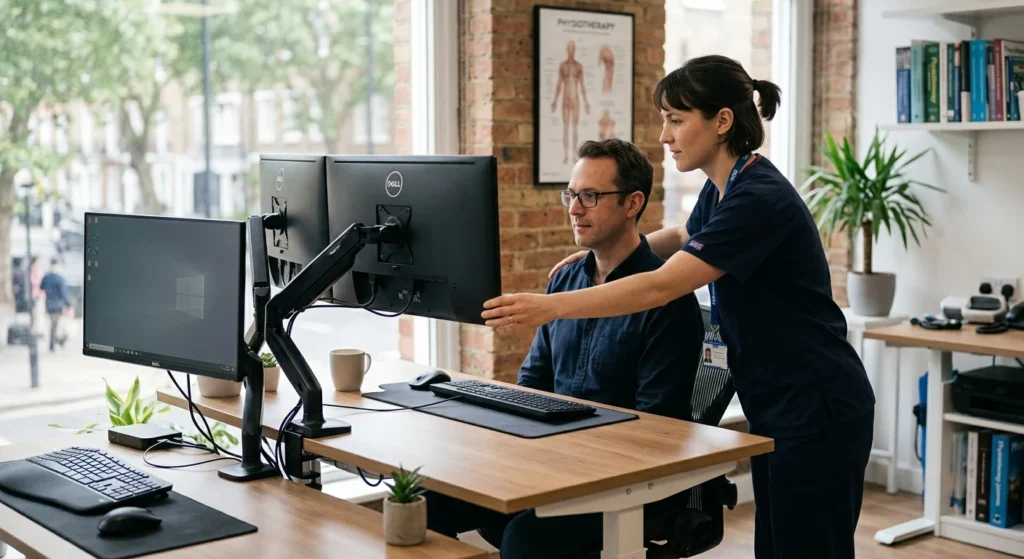
Exercises help, but your desk setup decides how often the neck is challenged during the day. Raise your screen so the top third is near eye level. If you use a laptop for long periods, consider a laptop stand with a separate keyboard and mouse. Keep the mouse close so the shoulder is not constantly reaching forward.
Your chair should support you enough that you do not have to hold yourself upright all day. Feet should rest on the floor or a footrest. Hips should be supported. The elbows should sit comfortably near the body. None of this needs to be perfect, but each small improvement reduces the load on the neck.
The most important ergonomic tool is still movement. Even an excellent chair becomes uncomfortable if you sit in it without moving for four hours. Try a simple rhythm: every 30 to 45 minutes, stand, walk briefly, do two neck rotations, two thoracic extensions and two shoulder blade retractions. It takes less than a minute.
Stress, Breathing And Neck Tension
Neck pain is not always purely mechanical. Stress can change breathing, jaw tension and shoulder posture. Many people unconsciously lift their shoulders, clench their jaw or breathe shallowly when concentrating. Over a full working day, that creates a lot of low-level muscle activity.
A simple reset is to place one hand on the lower ribs and take five slow breaths, allowing the ribs to move gently. Then relax the jaw, drop the shoulders and perform a small chin tuck. This is not a magic fix, but it can reduce the background tension that keeps the neck sensitive.
When Neck Pain Is Linked To The Arm
If neck pain travels into the arm, hand or fingers, the plan may need to change. Tingling, numbness, burning or weakness can suggest nerve involvement. Some gentle neck and shoulder movements may still be useful, but aggressive stretching or repeated end-range movements can irritate symptoms.
Book an assessment if arm symptoms are persistent, worsening or linked with weakness. A physiotherapist can check whether symptoms appear to be coming from the neck, shoulder, nerve sensitivity or another source. If medical review is needed, they can guide you appropriately.
A Practical Daily Neck Routine
Use this routine as a starting point if symptoms are mild to moderate and you have no warning signs. It should take five to eight minutes. Do it once in the morning and once during or after work. Add short movement breaks through the day if desk work is the main trigger.
- Chin tucks: 8 slow repetitions.
- Neck rotations: 5 each side.
- Upper trapezius stretch: 15 seconds each side.
- Thoracic extension over chair: 6 repetitions.
- Shoulder blade retractions: 10 repetitions.
- Two minutes of walking or standing away from the desk.
If symptoms reduce, keep the routine and gradually add strengthening. If symptoms flare, reduce the number of exercises and focus on the ones that feel calming. If there is no improvement after two weeks, an individual plan is a better next step.
How Physiotherapy Can Help
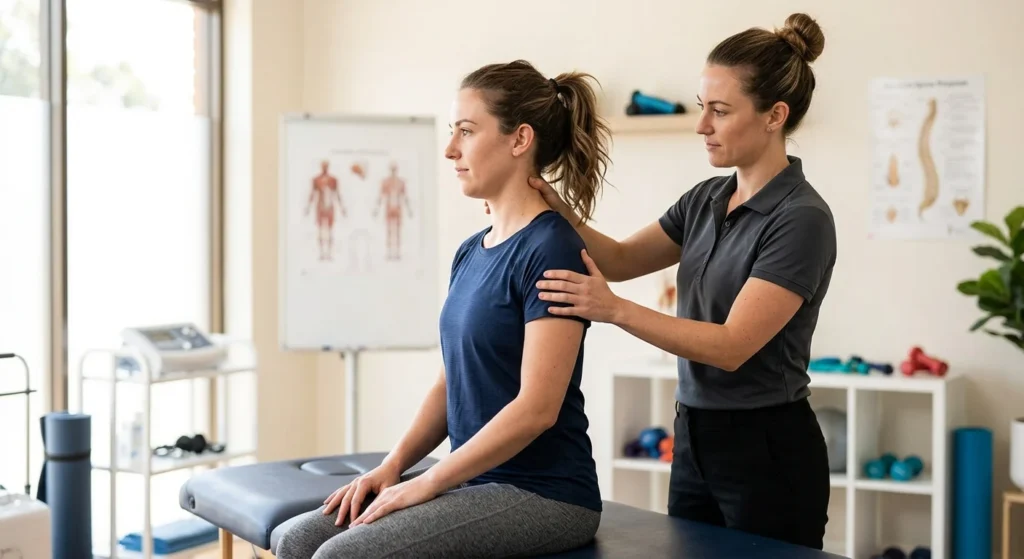
Physiotherapy for neck pain starts with understanding the pattern. At Prime Physiotherapy Clinic, we assess neck movement, upper-back mobility, shoulder function, work setup, symptom behaviour and any signs that suggest nerve involvement. Treatment may include manual therapy, exercise prescription, posture and workstation advice, strengthening and strategies to prevent recurrence.
Manual therapy can help when joints and muscles are guarded, but it should be paired with active work. Exercise prescription helps build endurance in the neck, shoulders and upper back so symptoms are less likely to return when work gets busy. The aim is not to make you dependent on treatment; it is to give you a plan that works in real life.
Morning Neck Stiffness Routine
If your neck is stiff first thing, avoid jumping straight into strong stretches. Start with heat if it helps, a short walk around the house and gentle movements within comfort. Try five slow neck rotations each way, five shoulder rolls and six chin tucks. Keep the range easy. The goal is to invite movement back, not to test the sorest angle.
Review your pillow if the pattern repeats. Side sleepers usually need enough height to keep the neck roughly level, while back sleepers often need less height. A pillow that pushes the head forwards can keep the neck flexed for hours. A pillow that is too low can leave the neck side-bent. No pillow is perfect for everyone, but the morning response is a useful guide.
Strengthening For Neck Pain
Mobility exercises are useful, but recurring neck pain often needs strength and endurance work. The neck and upper back have to support long working days, driving, lifting, training and stress. If those muscles fatigue quickly, posture reminders alone will not solve the problem. Strengthening helps your body tolerate the positions and tasks you actually do.
Start with low-load options. Chin tuck holds can be progressed from two seconds to five seconds. Shoulder blade retractions can progress to light resistance band rows. Wall slides can progress to controlled band pull-aparts. If you train in the gym, rows, pulldowns and carries may help when introduced with good control and without shrugging.
Progress one variable at a time. Add repetitions before resistance. Add resistance before speed. If the neck tightens during every strengthening exercise, reduce the load and check technique. The shoulders and upper back should be doing most of the work, not the jaw and neck.
Headaches, Jaw Tension And Neck Pain
Some headaches are influenced by neck stiffness, muscle tension or sustained posture. People often feel symptoms at the base of the skull, around the temples or behind the eyes. However, headaches can have many causes, so new, severe, unusual or worsening headaches should be assessed medically, especially if linked with neurological symptoms.
Jaw tension can also contribute to neck discomfort. If you clench when concentrating, the muscles around the jaw, throat and upper neck can stay active for long periods. A simple reset is to place the tongue gently on the roof of the mouth, relax the teeth apart, breathe slowly and let the shoulders drop. Pair this with a gentle chin tuck and upper-back movement break.
Driving, Commuting And Phone Use
Neck pain is not only a desk issue. Long driving can hold the head still and the shoulders slightly elevated. Set the seat so you are not reaching for the steering wheel, keep mirrors adjusted so you do not need to crane the neck, and take breaks on longer journeys. Small shoulder blade movements at traffic lights can help, provided you stay safe and focused on driving.
Phone use deserves attention too. Looking down for repeated short sessions can add up to hours each week. Raise the phone closer to eye level, use voice notes when practical and avoid long scrolling sessions in bed if morning stiffness is an issue. These habit changes make your neck exercises more effective because they reduce repeated irritation.
Common Mistakes With Neck Exercises
A common mistake is doing the exercises only when pain is severe. Neck rehab works better as a regular routine, especially for desk workers. Another mistake is stretching the sore side harder and harder while ignoring upper-back mobility and shoulder strength. If a muscle feels tight because it is tired, strengthening may be more important than pulling on it.
Finally, avoid trying to hold a perfect posture all day. That usually creates more tension. Aim for more movement options: sit tall sometimes, relax sometimes, stand sometimes, walk often and use exercises to reset. The best posture strategy is one you can repeat on a busy day.
When To Add Gym Or Resistance Exercises
If the basic routine reduces symptoms, the next step is often resistance work. Start with exercises that strengthen the upper back and shoulders without provoking the neck. Light rows, band pull-aparts, wall slides, farmer carries with manageable weights and controlled pulldowns can all be useful. Keep the neck long, the jaw relaxed and the shoulders away from the ears.
Build slowly. Two sessions per week is enough for many people at first. If the neck feels worse the next day, reduce load or volume. If symptoms stay stable, gradually increase resistance. Strength work is not separate from neck pain rehab; it is often what helps the neck cope with real work, training and life demands.
A Weekly Maintenance Plan
Once symptoms are improving, keep a small maintenance routine. Do mobility breaks on working days, resistance work two or three times per week and review your desk setup when your workload changes. Neck pain often returns after deadlines, travel, poor sleep or a sudden increase in screen time. A maintenance plan helps you respond early rather than waiting for a full flare.
Maintenance should be realistic. You do not need a long routine forever. Five minutes of movement, a couple of strength sessions and better work breaks can be enough for many people. The aim is to make your neck more adaptable, not to live around exercises.
If you are unsure where to start, choose the least irritating movement first and repeat it consistently for a week. A calm, repeatable routine gives better information than changing exercises every day. Once the neck trusts movement again, strength and desk changes become easier to build in.
FAQs About Neck Pain Exercises
What is the best exercise for neck pain?
There is no single best exercise for everyone. Chin tucks, gentle rotations, upper-back mobility and shoulder blade exercises are common starting points, but the right choice depends on your symptoms and triggers.
Should I stretch a stiff neck?
Gentle stretching may help, but strong pulling can irritate symptoms. Keep stretches mild and stop if pain travels into the arm or if symptoms worsen afterwards.
How often should desk workers do neck exercises?
Short movement breaks every 30 to 45 minutes are often more useful than one long exercise session. A five-minute routine once or twice daily can also help when done consistently.
When should I see a physio for neck pain?
See a physiotherapist if pain lasts more than two weeks, keeps returning, affects sleep or work, or is linked with arm symptoms, headaches or loss of movement. Seek urgent medical advice for severe neurological symptoms or symptoms after significant trauma.
Book A Neck Pain Assessment
If neck pain is limiting your work, sleep, driving or training, a targeted assessment can help you stop guessing. Prime Physiotherapy Clinic can build a plan using physiotherapy assessment, manual therapy and exercise prescription where appropriate.
You can book an appointment online or contact the clinic if you want advice on the right appointment type.