
Does the front of your knee ache on a run, on the stairs or after sitting through a film? That nagging pain around or behind the kneecap is often runner’s knee. It is common, and it usually gets better with the right exercise.
This runners knee guide explains what it is, why it happens, 6 exercises with NHS doses, how long recovery takes and when to get help. Not sure what is causing your pain? A physiotherapy assessment can find out.
Key takeaways
- Strengthening your hip and thigh muscles is the main treatment.
- Keep exercise pain at 5 out of 10 or less, and no worse the next morning.
- NHS physiotherapists say it can take 6 to 8 weeks to notice a difference.
- Get urgent advice if your knee is badly swollen, locks, gives way or cannot take your weight.
What is runner’s knee?
Runner’s knee usually means patellofemoral pain: an ache around or behind your kneecap. It gets worse with activities that load the bent knee, such as squatting, stairs, running and jumping. The medical name is patellofemoral pain syndrome.
Your kneecap (patella) sits against the end of your thigh bone (femur), and this joint is where it hurts. The NHS says knee pain in runners is also called runner’s knee and can have many causes.
NHS Lanarkshire says around a quarter of adults and a third of teenagers may get symptoms at some stage. Women are twice as likely as men to develop it.
Runner’s knee, ITB syndrome or jumper’s knee?
Where it hurts gives a clue, and a physiotherapist can tell these apart. Pain around or behind the kneecap points to runner’s knee, while outer knee pain in runners is more often iliotibial band (ITB) syndrome. Pain between the kneecap and shin after running or jumping can be tendonitis, often called jumper’s knee.
Runner’s knee symptoms
The main symptom is an ache at the front of your knee, around or behind the kneecap. It can turn into a sharper pain with some activities, and it can affect one or both knees. NHS inform and NHS Lanarkshire list these common signs:
- pain on the stairs, especially going down
- pain when you squat or kneel
- pain during or after more exercise than usual
- pain after sitting for a while, such as driving or at the cinema
- clicking or grinding when you bend or straighten your knee
- a feeling that your knee might give way
- some swelling, or tight calves and thighs
Clicking or grinding can sound worrying. NHS Lanarkshire says it does not mean you are causing damage, and it is important to keep your knee moving.
What causes runner’s knee?
It usually starts when the load on your kneecap joint rises faster than your knee is used to, rather than from one injury. There is often no single cause. NHS Lanarkshire and NHS inform list these common triggers:
- starting running or another new activity
- running further, faster or more often
- returning to exercise after a break, when muscles have weakened
- weak or tight muscles around your hips and thighs, or tight hamstrings and calves
- unsupportive footwear, such as high heels or very flat shoes
- a job with a lot of kneeling, or sitting for long periods
- being overweight
NHS Lanarkshire calls this leaving your knee’s “comfort zone”. A sudden jump, such as longer runs or extra shifts on your feet, can make it hurt without any injury.
What to do when runner’s knee flares up
Wondering how to fix runners knee when it flares up? Ease the load rather than stopping everything, calm the pain, and get your knee checked if it does not settle.
- Stop running if it hurts. If your knee still hurts after a week’s rest, see a GP or physiotherapist.
- Keep moving. Spread gentle activity through the day with short rests.
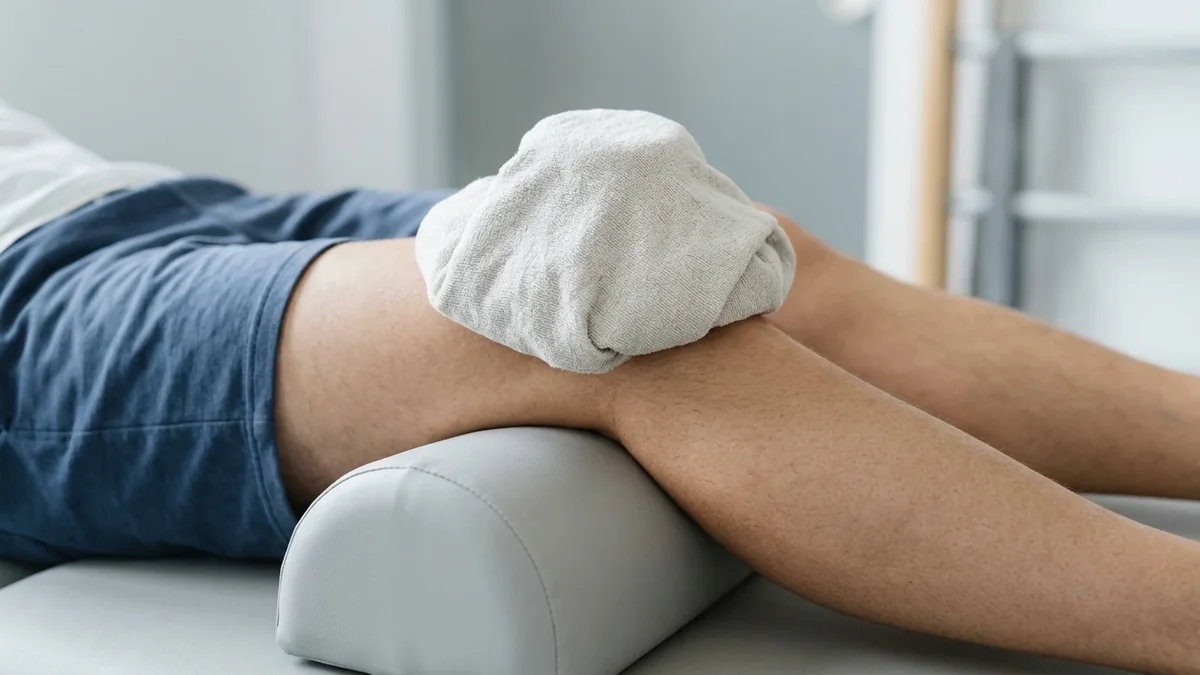
- Use wrapped ice. Hold an ice pack wrapped in a damp tea towel on your knee for 10 to 20 minutes. Do this 2 to 3 times a day for the first 5 to 7 days of a flare-up, never on bare or numb skin.
- Ask about painkillers. The NHS says paracetamol or ibuprofen gel can help, and a pharmacist can advise you.
- Take the stairs carefully. Use the handrail, lead with your good leg going up and with your sore leg coming down.
6 runners knee exercises to start with
Strengthening your thigh and hip muscles is the main way to treat it and the core of runner’s knee rehab. NHS inform says the strongest evidence supports this, and an expert panel favours combining hip and knee exercises. You need a bed or mat, a pillow and the bottom stair.
How much pain is OK?
NHS inform’s pain guide rates exercise pain out of 10:
- 0 to 3: minimal pain
- 4 to 5: acceptable pain
- 6 to 10: too much, so make the exercise easier
If your pain goes above 5, do fewer reps, move more slowly or rest longer. Your knee should be no worse the next morning. Stop if the exercises cause new pain or make it worse overall.
Start with 2 to 3 reps at a time, several times a day, and build up as the table below shows.
1. Thigh tightening
- Lie on your bed with your legs straight.
- Tighten your thigh muscle and gently push the back of your knee into the bed.
- Hold for 10 seconds, then relax.
2. Straight leg raise
- Lie on your back with one leg straight and the other knee bent.
- Slowly lift the straight leg off the bed.
- Hold for 5 seconds, then lower it back down.
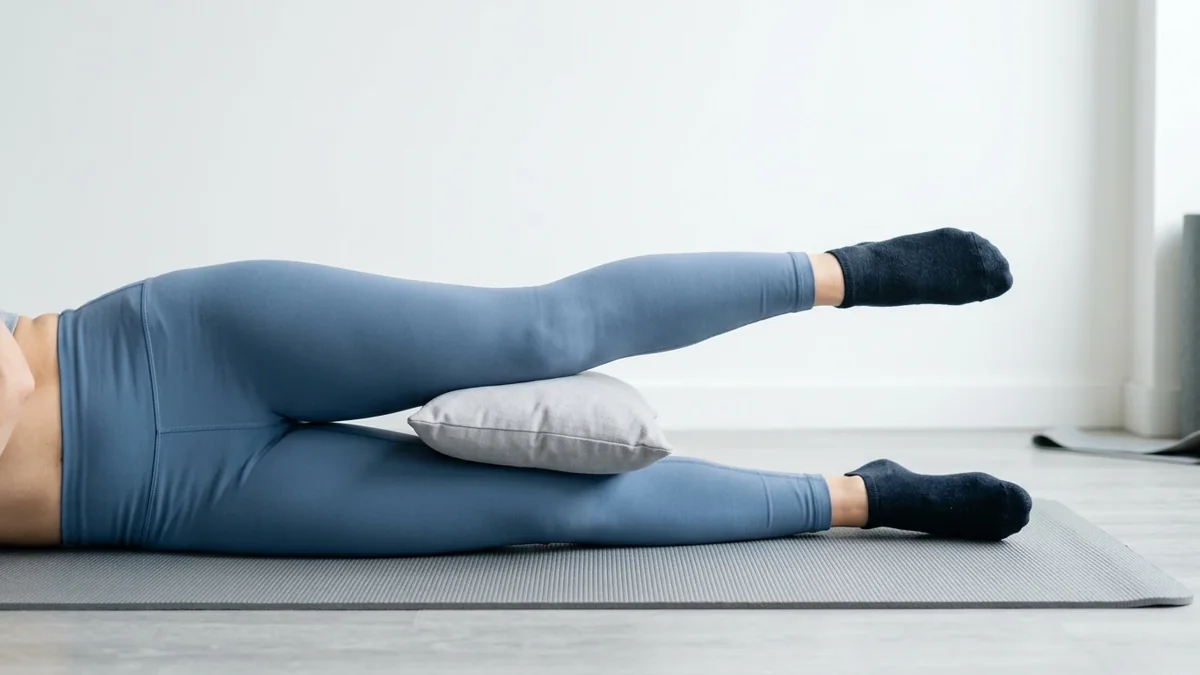
3. Side-lying leg raise
- Lie on your side with your head supported and a pillow between your knees.
- Gently raise your top leg towards the ceiling, keeping it in line with your body.
- Hold for a few seconds, then lower it.
4. Step-ups
- Stand at the bottom of your stairs and step up, leading with your sore leg.
- Keep that leg on the step and slowly step the other leg up and down.
5. Squats
- Stand with your feet shoulder-width apart, pointing slightly outwards.
- Bend your knees as if you are going to sit down, only as far as is comfortable.
- Keep your back straight and your knees behind your toes, then stand back up.
6. Thigh, hamstring and calf stretches
- Thigh: lie on your side and pull your top heel towards your buttock, knees together.
- Hamstring: lie on your back and pull one straight leg gently towards you.
- Calf: step one leg forward and bend it, keeping the back leg straight and its heel down.
Hold each stretch for 15 to 20 seconds, as in the NHS stretching routine.
| Stage | Exercises | How much | Move on when |
|---|---|---|---|
| Early | Exercises 1 to 3 and the stretches | 2 to 3 reps at a time, several times a day | They feel easy |
| Middle | Add step-ups and squats | Add 1 to 2 reps every few days, then 2 sets of 8 with a 1-minute rest, 2 to 3 times a day | They feel easy |
| Late | Keep doing all six | Build towards a maximum of 2 sets of 15 | You can return to running gradually |
A physiotherapist can also set a progressive exercise programme for your knee and adjust it as you improve.
Can you keep running with runner’s knee?
If running hurts, stop, and get it checked if it still hurts after a week’s rest. Once you know it is runner’s knee, you can usually change how you run rather than stopping all activity. NHS Lanarkshire advises pacing yourself, because complete rest lets your muscles weaken.
- Run for less time, or choose a flatter route.
- Swap some runs for swimming or cycling to keep fit and build leg strength.
- Choose lower-impact exercise, such as marching instead of jogging in a class.
- Stay within the pain guide above.
Build back up slowly, as in the prevention tips below. When you can run normally again, or train for a marathon, depends on the cause and how severe it is.
Pain at the back of the heel is a different running injury: read about Achilles tendon pain.
How long does runner’s knee take to heal?
It varies. NHS Lanarkshire’s physiotherapists say it can take 6 to 8 weeks of specific exercises to notice a difference. Feeling better can take a further couple of months.
Use these NHS milestones as a guide to runners knee recovery time:
| When | What NHS guidance says | Source |
|---|---|---|
| First 5 to 7 days of a flare-up | Wrapped ice for 10 to 20 minutes, 2 to 3 times a day | NHS Lanarkshire |
| After a week’s rest | Still sore? See a GP or physiotherapist | NHS |
| 6 weeks | Not improved, or getting worse? Talk to a healthcare professional | NHS inform |
| 6 to 8 weeks | Regular exercise often starts to make a noticeable difference | NHS Lanarkshire |
| Up to 12 weeks | Keep exercising, usually daily: a significant improvement may take this long | NHS Lanarkshire |
| 6 to 12 weeks with no improvement | A referral to a physiotherapist may help | NHS Lanarkshire |
For some people, symptoms come back or last for years, says a 2019 clinical practice guideline. In one 5 to 8-year follow-up, pain that had lasted over 12 months at the start predicted a poorer recovery. So it pays to start the right exercises early.
Do knee supports, straps or tape help runner’s knee?
They may ease pain for some people for a while, but they do not replace strengthening exercise. Many people look for a knee support for runners knee, such as a compression sleeve, strap or brace, yet the evidence is mixed.
International expert panels in 2016 and 2018 were uncertain about patellar taping and bracing. A 2024 best practice guide lists taping and ready-made insoles as extra options, chosen to suit each person, alongside exercise.
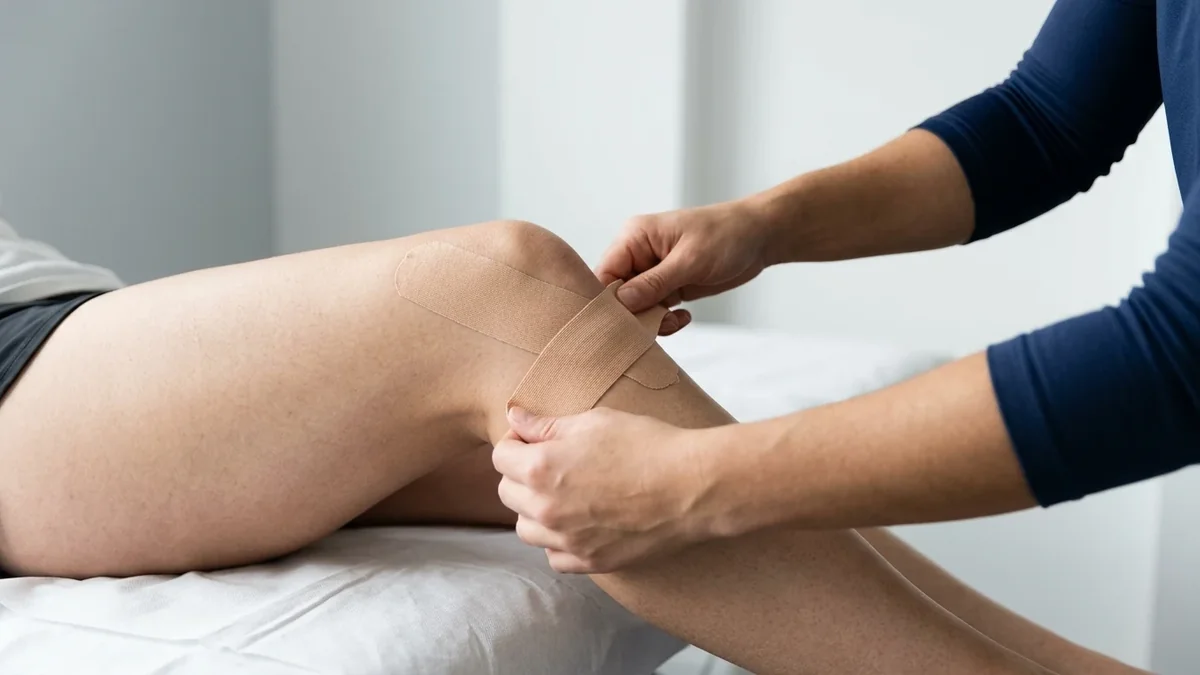
NHS Lanarkshire says a physiotherapist may tape your kneecap to help reduce pain while you exercise, especially early on. The 2016 panel recommended insoles (foot orthoses) to reduce pain in the short term, and a podiatrist can advise you on them. We use kinesiology taping where it suits you, included in the £50, 45-minute appointment.
How to prevent runner’s knee
Build up your running gradually and keep your hips and thighs strong. These NHS tips help:
- Do a similar run at least 3 or 4 times before you increase your pace or distance.
- Warm up with 5 to 10 minutes of brisk walking or gentle jogging, and cool down for 5 to 10 minutes.
- Get running shoes fitted at a running shop. They do not need to be expensive.
- Wear supportive trainers and keep to a healthy weight (NHS Lanarkshire).
- If you are not injured, try the NHS knee exercises for runners. They are not suitable if you already have a knee injury.
When to see a physiotherapist or get urgent help
Get urgent advice for the warning signs below. Otherwise, see a physiotherapist if your knee is not settling.
Get advice from NHS 111 now if:
- your knee is very painful
- you cannot move it or put any weight on it
- it is badly swollen or has changed shape
- it locks, gives way or painfully clicks
- you have a high temperature, or feel hot, cold or shivery, with redness or heat around your knee
You can also go to an urgent treatment centre. These signs come from the NHS knee pain guidance. For runners, the NHS also advises seeing a GP straight away if the pain is severe or the knee is swollen.
See a physiotherapist if your pain lasts after a week’s rest, has not improved within 6 weeks, or keeps coming back. Most adults in England can refer themselves to NHS physiotherapy, or you can book privately with no GP referral.
At Prime Physiotherapy Clinic, physio for runner’s knee starts by finding what drives your pain: your training, your strength and the movements that hurt. We then build an exercise plan with you, adding hands-on treatment or taping if it helps. If you need a scan or a doctor’s opinion, we explain why and advise your GP.
Ready to start? Book a physiotherapy assessment.
Runner’s knee FAQs
Are squats good for runner’s knee?
Yes, if you keep them comfortable. NHS Lanarkshire recommends combined hip and knee exercises, such as squats, for everyone with this condition. Bend only as far as is comfortable and keep pain at 5 out of 10 or less.
Is it OK to walk, cycle or swim with runner’s knee?
Usually, yes. NHS Lanarkshire suggests swimming or cycling to keep fit and build leg strength while running hurts, and walking is a gentle way to stay active. Keep within the same 5 out of 10 pain rule.
Is runner’s knee permanent?
Usually not. NHS Lanarkshire says it usually responds well to specific exercise and lifestyle changes, and surgery is very unlikely to be needed. For some people symptoms come back or last for years, so keep up a regular exercise programme.
Can you get runner’s knee without running?
Yes. Despite its name, it affects people who do sport and people who do not. Sitting for long periods, kneeling a lot, more time on your feet or a sudden change in activity can all bring it on.
Book a runner’s knee assessment in Birmingham
Runners knee usually responds well to the right strength work, sensible changes to your running and some patience. If your knee is not getting better, Prime Physiotherapy Clinic can assess it and build your plan.
Every appointment is £50 for 45 minutes, self-pay, with no GP referral needed. Visit us at Suite 3A, Cobalt Square, 83–85 Hagley Road, Birmingham B16 8QG. We are open Monday to Sunday, 9am to 9pm.
Book your knee assessment online, call or WhatsApp us on +44 7944 274894, or contact us. We aim to reply within 2 hours during opening hours.