
Pain on the inside of your elbow when you grip, lift or twist can make work, the gym and even opening a jar hard work. That is often golfer’s elbow. The right exercises are usually the main way to relieve it and help it settle.
This guide covers 6 golfers elbow exercises, with simple steps and doses. You will also find a pain guide, so you know how hard to push, and tips for training safely. If you are not sure your pain is golfer’s elbow, a physiotherapy assessment can confirm it.
Key takeaways
- A little pain is OK: keep it at 5 out of 10 or less, and no worse the next morning.
- Start with small amounts, then build up slowly.
- Strengthen your forearm, don’t just stretch it.
- Improvement takes weeks to months, so stay consistent.
What is golfer’s elbow?
Golfer’s elbow, or medial epicondylitis, is pain and tenderness on the inside of your elbow. It affects the tendons of the forearm muscles that bend your wrist and turn your palm down. It usually comes from overloading those muscles with repeated gripping, lifting or wrist bending.
NHS Lanarkshire lists these common signs:
- inner elbow pain when you grip, lift or bend your wrist forward
- pain when you open jars or twist your wrist
- a tender spot on the inner side of the elbow
- stiffness, especially first thing in the morning
Despite the name, most cases are not caused by golf. The same medical reference notes that most happen in non-athletes, especially people whose work involves repetitive, forceful gripping.
NHS Lanarkshire adds triggers such as typing, using a mouse, a sudden burst of DIY or gardening, and vibrating tools. It is less common than tennis elbow and most often affects people aged 40 to 60.
Golfer’s elbow vs tennis elbow
Golfer’s elbow hurts on the inside of the elbow, while tennis elbow causes pain on the outside. Different tendons are involved, so the exercises differ. If your pain is on the outer side, see our tennis elbow exercises guide.
How much pain is OK when you exercise?
Some discomfort is normal. Aim to keep your pain at 5 out of 10 or less while you exercise, and check that it is no worse the next morning. NHS inform’s pain guide rates pain like this:
- 0 to 3: minimal pain
- 4 to 5: acceptable pain
- 6 to 10: too much, so make the exercise easier
If your pain goes above 5, do fewer reps, move more slowly or rest longer between reps. Short-lived muscle soreness from new exercises should ease quickly. Stop if the exercises make your symptoms worse overall or cause new pain.
University Hospitals of Derby and Burton says some elbow pain during these exercises is normal, and that it is safe to carry on. Early on, keep golfers elbow stretches gentle. Cleveland Clinic’s physical therapist warns that too much stretching can make an irritated tendon worse.
6 golfers elbow exercises
You will need a table, a light weight of 0.5 to 1kg and a resistance band. A tin of food or a water bottle works as a weight, and a tennis ball helps with exercise 6. Start with the first three exercises for golfers elbow, then add the strengthening moves.
1. Wrist flexor stretch
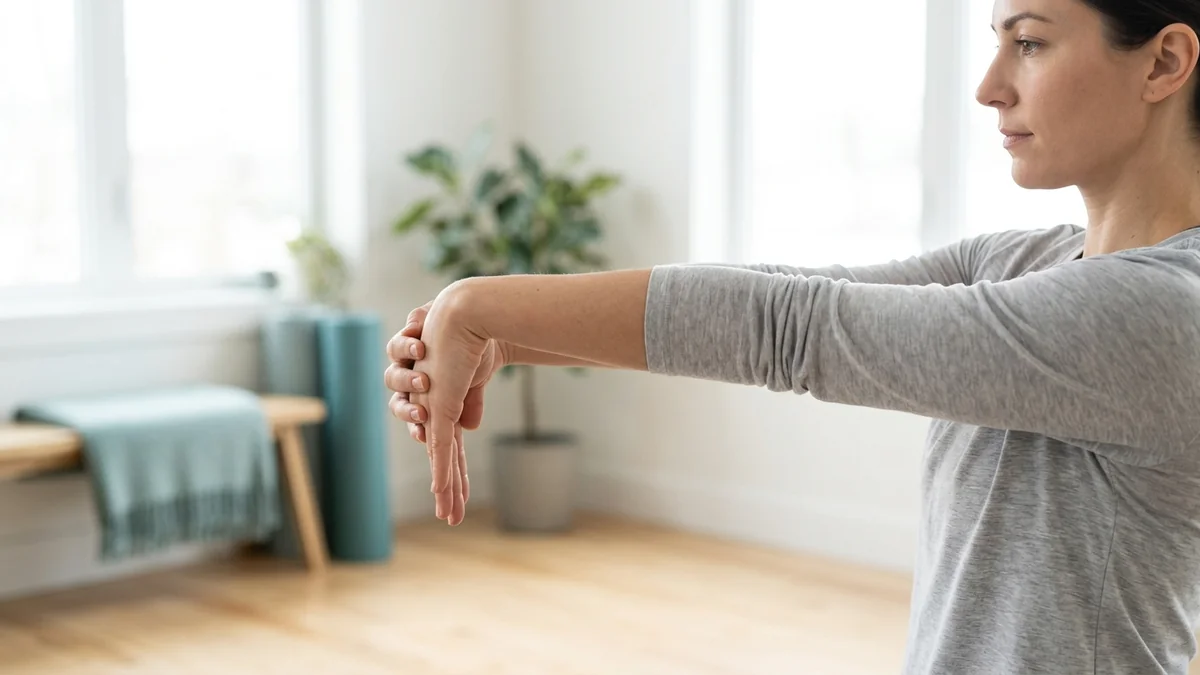
- Hold your sore arm out in front with the elbow straight, palm facing up and shoulder relaxed.
- Cup your other hand around the palm and fingers.
- Slowly press the hand back towards you until you feel a gentle stretch in your inner forearm.
- Keep your elbow straight the whole time.
Hold 15–30 seconds · repeat 2–4 times. The steps follow South Tees NHS Foundation Trust’s golfer’s elbow stretch. If stretching irritates your elbow, swap to exercise 2 for now.
2. Gentle wrist movement
- Hold your arm out in front of you.
- Slowly bend your wrist down, then up, through a comfortable range.
20–30 times, several times a day, with no long holds. This keeps the wrist moving without straining a sore tendon.
3. Isometric wrist hold
Isometric means the muscle works without the joint moving, which often suits a painful tendon.
- Rest your forearm on a table or your thigh, palm facing up.
- Place your other hand on top of your palm.
- Try to bend your wrist upwards while your other hand stops it moving.
- Keep the pressure steady and comfortable.
Hold 30 seconds to 1 minute · 5–8 times through the day. This hold comes from Cleveland Clinic’s golfer’s elbow exercises.
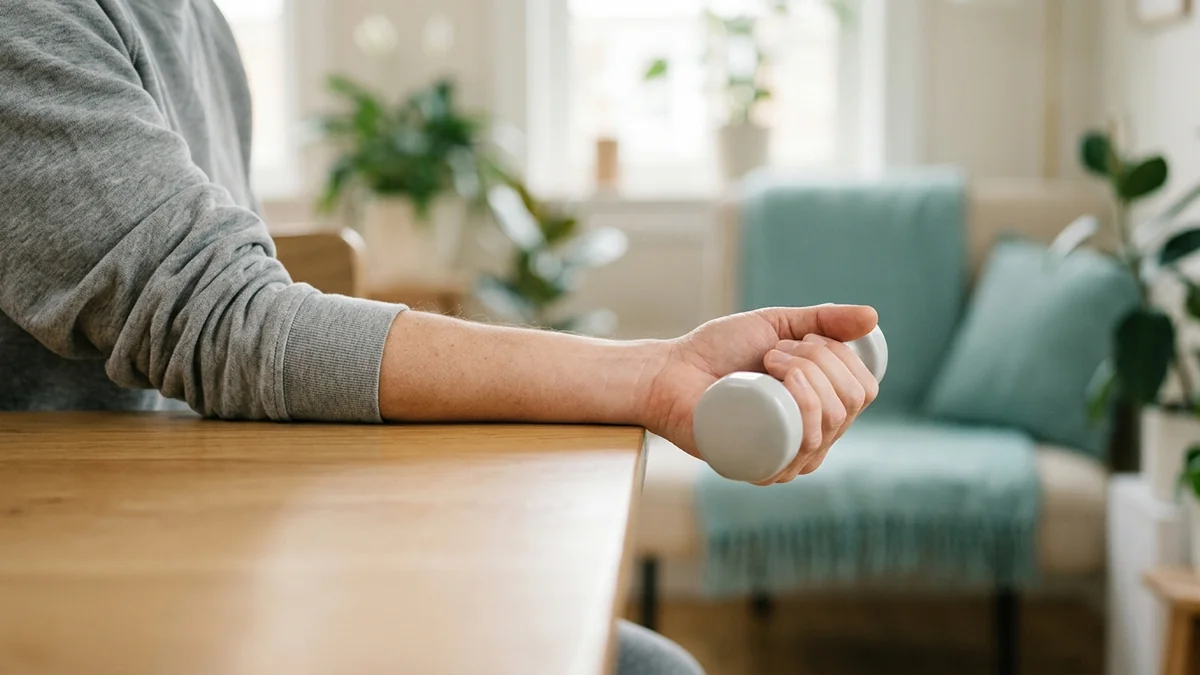
4. Wrist curls with a light weight
- Rest your forearm on a table, palm up, with your wrist just over the edge.
- Hold a light weight of 0.5 to 1kg.
- Slowly curl the weight up by bending your wrist.
- Lower it slowly back down.
8–12 reps. The weight and reps follow Alberta Health Services’ golfer’s elbow exercises.
5. Forearm turns with a band
Turning your palm down is called pronation, and turning it up is called supination. Both use muscles that attach near the sore spot.
- Hold one end of a resistance band, with the other end under your foot.
- Keep your elbow bent at your side.
- Slowly turn your palm down against the band, then return.
- Set the band the other way and practise turning your palm up.
8–12 reps in each direction.
6. Forearm soft-tissue rolling
- Rest your forearm on a tennis ball on a table.
- Slowly roll your forearm up and down over the ball.
- Pause on tender spots and gently bend and straighten your wrist.
10–15 rolls, a few times a day. Use lighter pressure if the area is sensitive.
How to progress: a simple 3-stage plan
Start with small amounts often, then build to sets as the exercises get easier. NHS Lanarkshire’s physiotherapists advise moving to the next stage only when the current one feels easy.
| Stage | Exercises | How much | Move on when |
|---|---|---|---|
| Early | Gentle wrist movement, isometric hold and a gentle stretch | 2–3 reps at a time, a few times through the day | They feel easy |
| Middle | Add wrist curls and forearm turns with a band | Add 1–2 reps every few days, then sets of 8 with a 1-minute rest, 2–3 times a day | They feel easy |
| Late | Keep strengthening and slowly increase the weight | Build towards a maximum of 2 sets of 15 | Return to normal activities gradually |
If your pain flares up, cut back and build up again gradually, as UHDB advises. Be patient: NHS Lanarkshire says it can take 6 to 8 weeks of regular exercise to notice a difference.
If you would like support, we can set you a progressive exercise programme and adjust it as you improve.
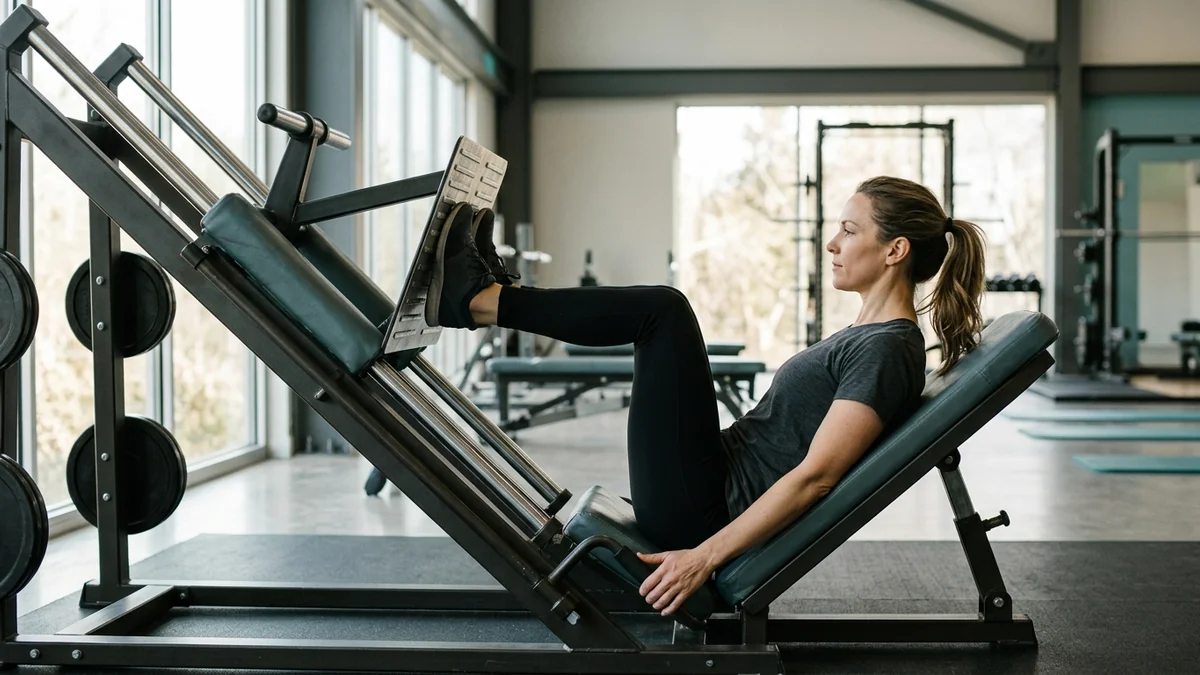
Working out with golfers elbow
You can usually keep training, and your golfers elbow workout can carry on with a few changes. Adjust the exercises that load your gripping and wrist-bending muscles, and let the pain guide decide how much you do.
- Use the same pain rule: keep pain at 5 out of 10 or less during your session, and no worse the next morning.
- Ease off heavy-grip lifts for now: bicep curls, back exercises such as rows and pull-ups, and wrist work all load the muscles involved. Pain when you bend your wrist or turn your palm down against resistance is typical, so lighten or pause these while it is sore.
- Change your grip: Mersey Care suggests adjusting your grip or the position of your hand and wrist. UHDB notes that lifting with your palms facing down is often more comfortable.
- Relax your grip and take breaks: hold equipment no tighter than you need to.
- Keep training what doesn’t hurt: lower-body work that needs little grip can usually carry on.
- Build back gradually: Mersey Care’s advice is to start by exercising gradually and build up over time.
Golfers elbow exercises to avoid, and other self-care
While your elbow is sore, avoid movements that strain your forearm muscles, especially repeated gripping, lifting and twisting. NHS Lanarkshire suggests you:
- avoid painful movements that strain the forearm muscles
- cut down repetitive wrist twisting, gripping and lifting
- take regular short breaks from typing, lifting or repetitive work
- ask your employer about ergonomic equipment if computer work sets off your pain
For a flare-up, NHS Lanarkshire suggests wrapped ice for 10–20 minutes, 2–3 times a day, for the first 5–7 days. Never put ice on numb skin. After 2–3 days, a warm heat pad for 10–15 minutes, 3–4 times daily, may feel better.
Painkillers or anti-inflammatory gels may help you keep exercising, but check with your GP or pharmacist first.
When to see a physiotherapist
See a physiotherapist if your elbow is not improving after about 6 weeks of following this advice, or if the pain keeps getting worse.
NHS inform suggests talking to a healthcare professional if there is no improvement within 6 weeks. NHS Lanarkshire says a physiotherapy referral may help if there’s no improvement after 6 to 12 weeks.
UHDB notes that golfer’s elbow does not routinely need X-rays or scans. In many areas you can refer yourself to NHS physiotherapy, or you can book privately.
A physiotherapist can confirm the diagnosis, set the right load for your tendon and add hands-on treatment where it suits you. The NHS lists acupuncture among the treatments physiotherapy can include, and we offer acupuncture and dry needling as an option. You can book a physiotherapy assessment to get started.
FAQs about golfers elbow exercises
Can I still work out with golfer’s elbow?
Usually, yes. Keep your pain at 5 out of 10 or less during exercise and no worse the next morning, as NHS inform advises. Lighten or pause heavy gripping and wrist work, change your grip if it helps, and build back up gradually.
What exercises should I avoid with golfer’s elbow?
While it is sore, avoid exercises that hurt and that strain the forearm muscles, such as heavy gripping, curling, pulling and repeated wrist twisting. Pain when bending the wrist or turning the palm down against resistance is typical, so ease these off first.
How long does golfer’s elbow take to heal?
It varies. NHS Lanarkshire says it can take 6 to 8 weeks of exercise to notice a difference, with full recovery taking 6 months to 2 years. University Hospitals of Derby and Burton says most people improve over a few months with exercise and changes to daily activities.
Book an elbow pain assessment in Birmingham
Golfers elbow exercises work best when the dose suits your tendon and you stick with them. If your inner elbow pain is not settling, Prime Physiotherapy Clinic can assess it and build your plan.
Visit us at Suite 3A, Cobalt Square, 83–85 Hagley Road, Birmingham B16 8QG. We are open Monday to Sunday, 9am to 9pm. Book your elbow assessment online, or call or WhatsApp us on +44 7944 274894.