Frozen shoulder exercises can be helpful, but only when they match the stage of the condition and the irritability of the shoulder. A frozen shoulder can feel deeply frustrating because simple things like reaching for a seat belt, putting on a coat, washing your hair or sleeping on one side become difficult. The shoulder often feels stiff and painful at the same time, which makes people wonder whether they should stretch harder or rest completely.
The safest answer is usually somewhere in the middle. The shoulder needs movement, but it does not respond well to being forced. This guide explains what frozen shoulder is, how symptoms often change over time, which exercises may help, what to avoid and when physiotherapy treatment can support recovery. It is written for people who want practical UK physiotherapy advice, not a list of random stretches without context.
What Is Frozen Shoulder?
Frozen shoulder, also called adhesive capsulitis, is a condition where the shoulder capsule becomes painful and stiff. The capsule is the soft tissue envelope around the shoulder joint. When it becomes irritated and tight, the ball-and-socket movement of the shoulder becomes restricted. This can limit reaching overhead, reaching behind the back and rotating the arm out to the side.
Frozen shoulder is different from a simple muscle strain. It often has a characteristic capsular pattern, which means certain directions are restricted more than others. External rotation is commonly very limited. People often notice that even if they try to lift the arm with the other hand, the shoulder feels blocked rather than simply weak.
The condition can occur without a clear cause, but it is more common in people with diabetes, thyroid conditions, after shoulder injury, after surgery or after a period of not moving the shoulder normally. It can also appear gradually, with pain first and stiffness becoming more obvious later. Because other shoulder problems can look similar, assessment is useful if symptoms are not settling.
The Three Stages Of Frozen Shoulder
Frozen shoulder is often described in three stages: freezing, frozen and thawing. Real life is not always as neat as textbook stages, but the idea helps guide exercise choice. The mistake many people make is doing aggressive stretching in the freezing stage, when the shoulder is highly painful and reactive.
Freezing Stage
The freezing stage is usually the painful stage. The shoulder may ache at rest, hurt at night and react strongly to sudden movements. Reaching behind the back or out to the side can produce sharp pain. In this stage, exercises should be gentle. The aim is to keep the shoulder moving within tolerance, reduce guarding and maintain confidence without repeatedly provoking strong pain.
Frozen Stage
The frozen stage is often less painful but more stiff. The shoulder feels restricted and daily tasks remain awkward. This is where mobility work can become more structured. Stretches may be held a little longer, strengthening can be introduced and manual therapy may help improve comfortable movement. Progress can be slow, so consistency matters.
Thawing Stage
The thawing stage is where range and function gradually return. Exercises become more active and task-focused. The goal is not just to lift the arm higher in one stretch, but to regain practical use: dressing, reaching shelves, carrying shopping, gym exercises, swimming, tennis, golf or whatever matters to you.
How To Exercise Safely With Frozen Shoulder
Frozen shoulder exercises should usually sit in a mild to moderate discomfort range, not sharp pain. A useful rule is that discomfort during the exercise should settle back to baseline within a reasonable period afterwards. If your shoulder throbs for hours after stretching, the dose was too high. That does not mean movement is bad; it means the shoulder needs a gentler entry point.
Keep the rest of the body relaxed. People with frozen shoulder often shrug the shoulder, hold their breath or twist the back to gain extra range. Those compensations are understandable, but they do not always help the shoulder joint itself. Move slowly, breathe normally and stop before the movement becomes a battle.
Small amounts done regularly usually work better than one aggressive session. Two or three short sessions across the day can be more effective than forcing long stretches once at night. The shoulder responds to repeated, tolerable exposure. Think of the exercises as a conversation with the joint, not a wrestling match.
Frozen Shoulder Exercises To Start With
The following exercises are common starting points. They are not a substitute for individual assessment, especially if you have severe pain, a recent injury, unexplained weakness or symptoms that do not fit the pattern of frozen shoulder. Choose the exercises that feel manageable and leave out anything that causes a clear flare.
1. Pendulum Exercise
Lean forward with your unaffected hand supported on a table or chair. Let the affected arm hang relaxed. Gently shift your body weight to allow the arm to swing in small circles or forward and back. The movement should come mostly from your body, not from actively lifting the shoulder. Try 30 to 60 seconds.
This exercise is useful when the shoulder is painful because it encourages movement without demanding much muscle effort. Keep the circles small at first. If the shoulder feels more guarded afterwards, reduce the range or use it only as a warm-up.
2. Table Slides
Sit at a table with your hand resting on a towel. Slide the hand forward as you gently lean the body forward, then return. You can also slide slightly diagonally to explore different angles. Aim for a comfortable stretch at the shoulder, not a sharp pinch. Try 8 to 12 slow repetitions.
Table slides are helpful because the table supports some of the arm weight. This often feels safer than lifting the arm in the air. If your shoulder is very irritable, start with a small slide and build gradually.
3. Wall Slides
Stand facing a wall with your fingertips resting on it. Slowly walk the fingers up the wall until you feel a manageable stretch, pause briefly, then walk them down. Avoid leaning heavily into the wall or shrugging the shoulder to force height. Try 5 to 10 repetitions.
Wall slides are easy to measure because you can notice how high the hand reaches over time. However, do not chase height every session. The quality of movement and the symptom response later in the day matter more than a few extra centimetres.
4. Assisted External Rotation
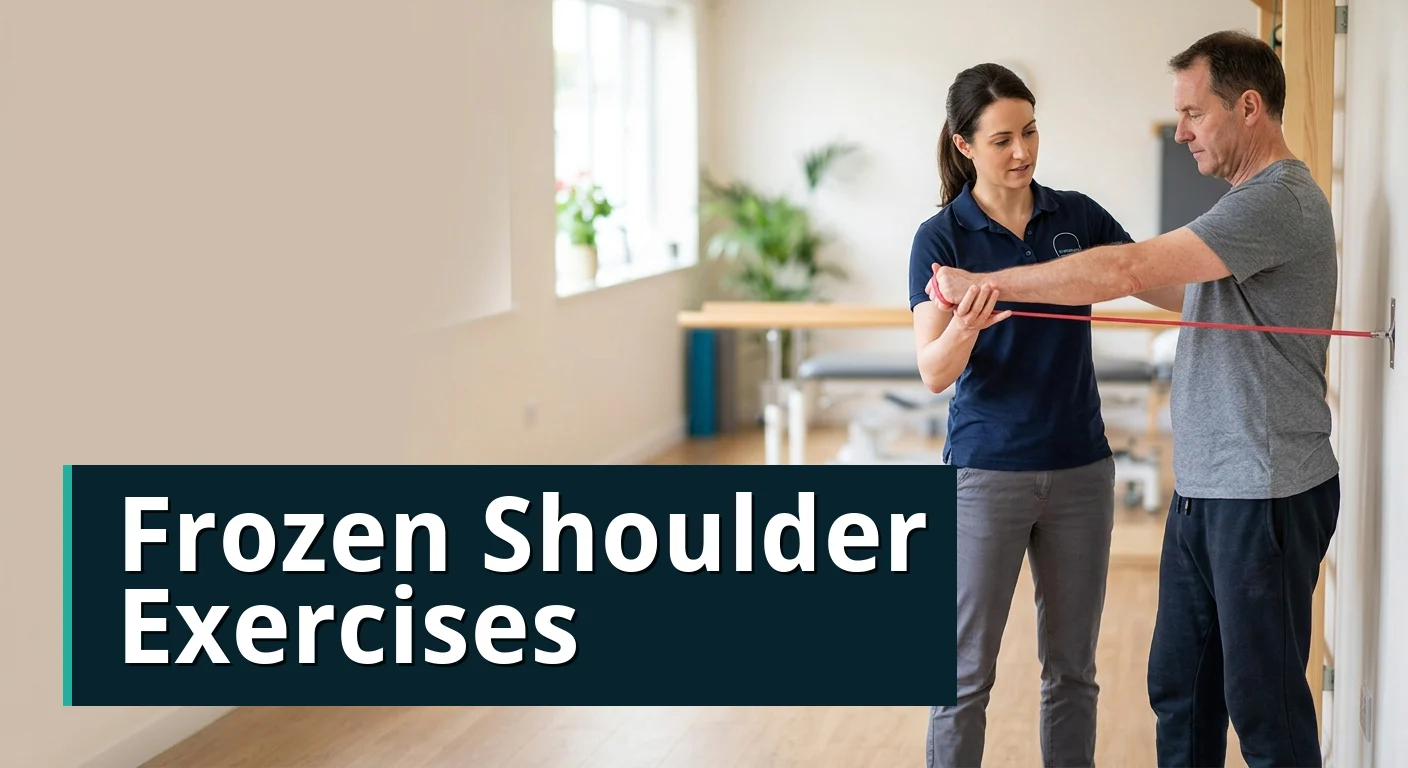
Hold a walking stick, broom handle or towel with both hands. Keep the elbow of the affected arm close to your side and bent to about 90 degrees. Use the other hand to gently guide the affected forearm outwards. Stop at a mild stretch, hold for 5 to 10 seconds, then return. Repeat 5 to 8 times.
External rotation is often restricted in frozen shoulder, so this exercise can feel surprisingly limited. That is normal. Do not twist the trunk to pretend the shoulder has moved further. Keep it honest and gentle.
5. Hand Behind Back With Towel Assistance
Reaching behind the back is often one of the hardest movements. Hold a towel behind your back with the unaffected hand above and the affected hand below. Use the top hand to guide the lower hand very gently upwards until you feel a stretch at the front or side of the shoulder. Hold briefly, then relax.
This can be provocative, so it is not always a first-week exercise. If it causes sharp pain or a long flare, leave it out and work on easier mobility first. It is better to build towards behind-the-back movement than to irritate it daily.
6. Shoulder Blade Setting
Sit or stand tall. Gently draw the shoulder blades back and slightly down, as though widening the collarbones. Do not squeeze hard or arch the lower back. Hold for three seconds, then relax. Repeat 8 to 12 times. This exercise does not directly stretch the capsule, but it helps reduce protective shoulder posture.
When To Add Strengthening
Strengthening is often introduced once pain is more controlled and the shoulder can tolerate light loading. This does not mean waiting until the shoulder is perfect. It means choosing the right dose. Isometric exercises, where the muscle works without much joint movement, can be a useful starting point.
For example, stand side-on to a wall with the elbow close to your body. Gently press the back of the hand into the wall as if rotating outward, but do not let the arm move. Hold for 5 seconds and repeat 5 times. You can also press the palm into a wall for internal rotation. Keep effort around 30 to 50 percent at first.
Later, resistance band exercises can help rebuild shoulder strength. These should be progressed gradually and should not dominate the plan if mobility is still highly restricted. A physiotherapist can help decide when to shift from mainly mobility to a more balanced mobility and strengthening programme.
What To Avoid With Frozen Shoulder
Avoid forcing the arm through sharp pain. It is common to hear that frozen shoulder must be stretched aggressively, but many people flare badly when they push too hard. The shoulder capsule may need time and repeated gentle loading. More force does not always mean more progress.
- Avoid sudden jerky stretching or pulling the arm overhead.
- Avoid heavy overhead lifting while range is painful and limited.
- Avoid sleeping positions that compress the shoulder for long periods.
- Avoid measuring progress every hour, as daily variation is normal.
- Avoid stopping all movement unless advised medically.
If you go to the gym, modify pressing, overhead work and wide-grip movements. Lower-body training, walking, cycling and other comfortable activities can often continue. Staying generally active is useful for mood, sleep and overall recovery.

Can Manual Therapy Help Frozen Shoulder?
Manual therapy can be useful for some people with frozen shoulder, particularly when stiffness is limiting comfortable movement. Techniques may include gentle joint mobilisation, soft tissue work around the shoulder girdle and guided movement. The aim is not to force the shoulder open in one session. It is to reduce guarding, improve tolerance and support an exercise plan.
The best results usually come when hands-on treatment is combined with home exercises. Passive treatment alone may feel good briefly, but long-term change depends on repeated movement, progressive loading and confidence using the arm again. At Prime Physiotherapy Clinic, manual therapy is used as part of a broader plan when it fits the assessment findings.
How Long Does Frozen Shoulder Take To Recover?
Frozen shoulder is known for being slow. Some people improve over months, while others take longer. The timeline depends on the stage, symptom irritability, general health, diabetes status, sleep, activity levels and whether the shoulder has become deconditioned. This slow timeline can be discouraging, but it does not mean nothing can be done.
Useful progress may show up as less night pain, easier dressing, a slightly higher reach, less fear of movement or fewer sharp catches during the day. Range may return gradually rather than suddenly. Keeping a weekly note of practical function can be more encouraging than checking the mirror every day.
If the shoulder is extremely painful at night, if function is rapidly worsening, or if you are unsure whether it is truly frozen shoulder, assessment is sensible. Other conditions such as rotator cuff tears, shoulder arthritis, referred neck pain and inflammatory problems can overlap with shoulder stiffness.
A Simple Weekly Exercise Structure
A structured week helps prevent the common cycle of doing too much on a good day and nothing after a flare. Start with three to five exercises that you tolerate well. Do them little and often. If symptoms stay settled for a week, increase one variable: range, hold time, repetitions or resistance. Do not increase everything at once.
- Daily: pendulums, table slides or wall slides in a comfortable range.
- Three to five days per week: assisted external rotation and shoulder blade setting.
- Two to three days per week: light isometric strengthening if pain is controlled.
- Weekly review: check sleep, dressing, reaching and symptom flares.
If the plan feels too easy but your shoulder is improving, that is not a problem. Rehab does not need to feel dramatic to work. If the plan feels punishing and your shoulder is getting more painful, that is useful information too. The dose needs changing.
Pain Control And Sleep With Frozen Shoulder
Night pain is one of the hardest parts of frozen shoulder. Many people can cope with daytime stiffness, but poor sleep makes pain feel louder and recovery feel slower. Try supporting the affected arm with a pillow so the shoulder is not hanging forward or being pulled across the body. If you sleep on the unaffected side, place a pillow in front of the chest and rest the painful arm on it.
If you sleep on your back, a small pillow under the elbow can reduce strain at the front of the shoulder. Avoid lying directly on the painful side if it increases aching. Heat before bed may help some people relax the shoulder and neck muscles. Medication questions should be discussed with a pharmacist or GP, particularly if pain is repeatedly disturbing sleep.
Progressing Range Without Forcing It
Progression should be based on irritability. If the shoulder settles quickly after exercise and night pain is not worse, you may be able to increase the hold time, range or repetitions. If the shoulder throbs for hours, reduce the dose. The shoulder is still being trained when the movement is gentle. You do not need to force end range to make progress.
Use practical markers. Can you reach the back pocket more easily? Can you wash your hair with less compensation? Can you reach a shelf without a sharp catch? These small functional changes often matter more than measuring exact degrees. A physiotherapist may measure range, but your daily life tells the most useful story.
When range improves, add more active control. For example, after table slides become comfortable, progress to wall slides. After wall slides settle, add light resistance band work or controlled lifting through the available range. Strengthening helps the shoulder use the range it is regaining.
Frozen Shoulder, Diabetes And Other Health Factors
Frozen shoulder is more common in people with diabetes and some thyroid conditions. It can also behave more stubbornly in these groups. That does not mean exercise is pointless, but it does mean expectations should be realistic and the plan should be consistent. Good general health management, sleep and activity levels can all influence how manageable symptoms feel.
If you have diabetes and the shoulder is becoming increasingly stiff, it is worth seeking assessment early. The plan may include physiotherapy, discussion with your GP about pain control, and sometimes medical options such as injection referral depending on presentation. The right route depends on pain level, function and stage.

Common Mistakes With Frozen Shoulder Exercises
The most common mistake is treating every stage the same. A highly painful freezing shoulder usually needs calmer mobility and pain management. A less painful but stiff frozen shoulder can usually tolerate more structured stretching and strengthening. A thawing shoulder needs functional strength and return to normal use. If the exercise plan never changes, it may stop matching the problem.
Another mistake is letting the whole body compensate for the shoulder. Shrugging, twisting the trunk and holding the breath may help the hand reach higher, but they do not necessarily improve shoulder movement. Slow, honest range is better than a dramatic movement borrowed from the neck and back.
Finally, many people stop all arm use because they fear pain. It is sensible to avoid sharp pain, but the shoulder still needs safe daily movement. Light tasks such as supported reaching, gentle dressing practice and comfortable carrying can help maintain confidence. Rehab should connect to real tasks, not only exercises on a sheet.
Returning To Gym, Swimming And Daily Activity
Returning to exercise with frozen shoulder should be gradual and practical. Lower-body gym work, walking and cycling can often continue if the shoulder is comfortable. Upper-body training usually needs modification. Avoid heavy overhead pressing, deep dips, wide-grip bench pressing or sudden loaded stretches while the shoulder is painful and restricted. Use pain-free ranges and lighter loads.
Swimming can be difficult because front crawl and backstroke need shoulder rotation and overhead range. If swimming catches or increases night pain, reduce distance or use walking in water instead. Daily activities should also be graded. Practise reaching to a low shelf before a high shelf, light carrying before heavy bags and supported dressing movements before forcing the hand behind the back.
When Medical Options May Be Discussed
Some people with frozen shoulder need more than exercise and manual therapy, particularly when pain is severe and sleep is badly affected. A GP or appropriate medical clinician may discuss pain relief, injection options or referral pathways depending on the stage and symptoms. Physiotherapy still matters because pain relief alone does not automatically restore strength, confidence and shoulder use.
If an injection is considered, the timing and follow-up plan are important. Many people benefit from using a calmer pain period to improve movement and restart activity. Without a structured plan, the shoulder may feel better temporarily but remain stiff and underused. A combined approach often gives the best chance of useful functional change.
FAQs About Frozen Shoulder Exercises
Should frozen shoulder exercises hurt?
Mild discomfort or stretching can be normal, but sharp pain or a long flare afterwards is a sign that the exercise may be too strong. Exercises should be adjusted to the stage and irritability of the shoulder.
Is it better to rest or move a frozen shoulder?
Complete rest can increase stiffness, but forcing movement can flare pain. The best approach is usually regular, gentle movement within tolerance, progressed gradually as symptoms allow.
Can physiotherapy speed up frozen shoulder recovery?
Physiotherapy can help with pain management, mobility, exercise progression and confidence using the shoulder. It may not make every frozen shoulder resolve instantly, but it can make the recovery process clearer and more manageable.
When should I seek help?
Seek help if shoulder pain is severe, sleep is badly affected, movement is becoming more restricted, symptoms followed trauma, or you are unsure whether your symptoms are frozen shoulder. A physiotherapist can assess and guide the next step.
Book A Shoulder Assessment
If shoulder stiffness is limiting your sleep, work, gym training or daily routine, a clear assessment can save a lot of guesswork. Prime Physiotherapy Clinic can assess your shoulder movement, identify likely contributing factors and build a staged plan using manual therapy, exercise prescription and practical home advice where appropriate.
You can book a physiotherapy appointment online or contact the clinic if you are unsure which appointment is right for your shoulder symptoms.