
Muscle & Trigger Point Therapy
Our Services

Muscle & Trigger Point Therapy

Targeted therapy to release tight muscle knots and improve circulation in affected areas.

What Is Trigger Point Therapy?

Trigger point therapy targets hypersensitive nodules — commonly called “muscle knots” — that form within taut bands of skeletal muscle. These trigger points can cause local pain, referred pain to distant areas, restricted movement, and muscle weakness. They are a common source of persistent pain that is often overlooked.

Our physiotherapists use a combination of ischaemic compression, sustained pressure release, dry needling, and myofascial techniques to deactivate trigger points and restore normal muscle function. Treatment is always guided by a thorough assessment to identify which trigger points are causing your symptoms.


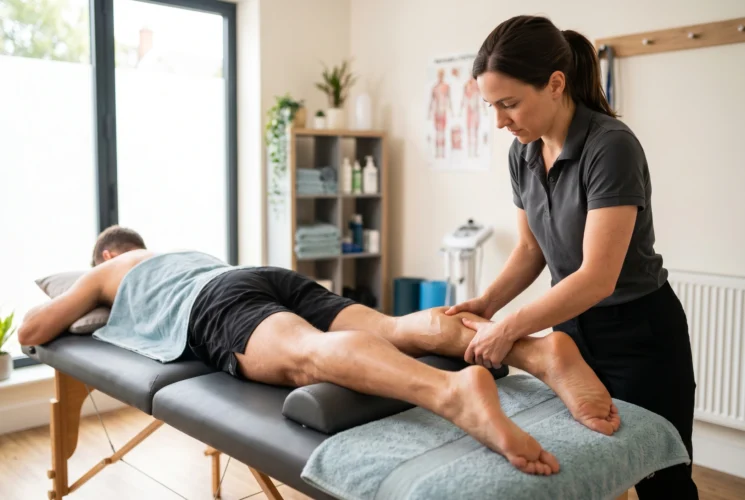
Precise pressure applied to deactivate trigger points

Who Is It For?

Trigger point therapy is ideal for anyone experiencing persistent muscle tightness, referred pain, or conditions like tension headaches, myofascial pain syndrome, and repetitive strain injuries. It’s particularly effective when other treatments have failed to fully resolve the problem.

Desk workers with upper trapezius tension, athletes with recurrent muscle tightness, and individuals with chronic pain conditions frequently benefit from targeted trigger point treatment.

What to Expect

Your physiotherapist begins by mapping your pain patterns and using skilled palpation to locate active trigger points. You’ll feel a deep, localised pressure during treatment — often described as a “good pain” that gradually eases as the trigger point releases.

After the release work, we apply stretching and movement techniques to encourage the muscle to maintain its new, relaxed length. We also teach you self-release techniques using foam rollers or massage balls, empowering you to manage symptoms between appointments. Most patients feel a significant improvement within 2-3 sessions.

Conditions We Treat

  • Tension Headaches & Migraines
  • Neck & Upper Trapezius Pain
  • Myofascial Pain Syndrome
  • Lower Back Muscle Spasm
  • IT Band Syndrome
  • Piriformis Syndrome
  • Plantar Fasciitis
  • Repetitive Strain Injury
  • Fibromyalgia
  • Jaw (TMJ) Muscle Tension

Why Choose Muscle & Trigger Point Therapy

Release stubborn muscle knots and adhesions

Relief from referred pain patterns

Improved local blood circulation

Reduced muscle tension and spasm

Restored muscle length and flexibility

Complementary to other physiotherapy treatments

Your Treatment Journey

1

Pain Mapping

We identify your pain locations and use palpation to locate active trigger points and taut muscle bands causing your symptoms.

2

Treatment Selection

Based on findings, your physiotherapist selects the most appropriate technique — ischaemic compression, dry needling, or sustained pressure.

3

Trigger Point Release

Precise, sustained pressure is applied to each identified trigger point until the muscle releases. You may feel a 'good pain' sensation during this process.

4

Stretching & Movement

Post-release stretching and movement work to consolidate gains and encourage the muscle to maintain its new, relaxed length.

5

Self-Management Advice

We teach you self-release techniques using foam rollers or massage balls so you can manage symptoms between appointments.

Frequently Asked Questions

What is a trigger point?

A trigger point is a hypersensitive nodule within a taut band of skeletal muscle. It can cause local pain, referred pain to other areas, and restricted range of motion. They are commonly known as 'muscle knots'.

Is trigger point therapy painful?

You will likely feel a deep, satisfying pressure during treatment — often described as a 'good pain'. Your physiotherapist controls the intensity and will always work within your tolerance.

How many sessions do I need for trigger point therapy?

Many patients feel significant relief after 2-3 sessions. Chronic or multiple trigger points may require a longer course. Your physiotherapist will advise based on your response to treatment.

Can trigger points come back?

Yes, especially if the underlying cause (posture, repetitive movement, stress) is not addressed. We provide ergonomic advice and self-management strategies to minimise recurrence.

Ready to Start Your Recovery?

Book your initial assessment today and take the first step towards a pain-free life.